Apple AI is no longer just a future promise. It is becoming one of the biggest stories in consumer technology, and 2026 could be the year Apple finally shows how serious it really is about artificial intelligence.
For years, Apple users have watched companies like OpenAI, Google, Microsoft, and Samsung race ahead with powerful AI assistants, chatbots, image tools, and productivity features. Apple, meanwhile, moved more carefully. That is very Apple: slower, more controlled, more focused on privacy, and usually more polished when the product is finally ready.
But in 2026, the pressure is different.
Apple Intelligence already exists across iPhone, iPad, and Mac, but users want more than summaries and writing tools. They want a smarter Siri. They want AI that understands context. They want useful automation. Developers want better tools. And everyday Apple users want AI that feels invisible, helpful, and safe.
The big question is simple: will 2026 be the year Apple AI finally catches up — or even changes the game?
Why Apple AI Matters So Much in 2026
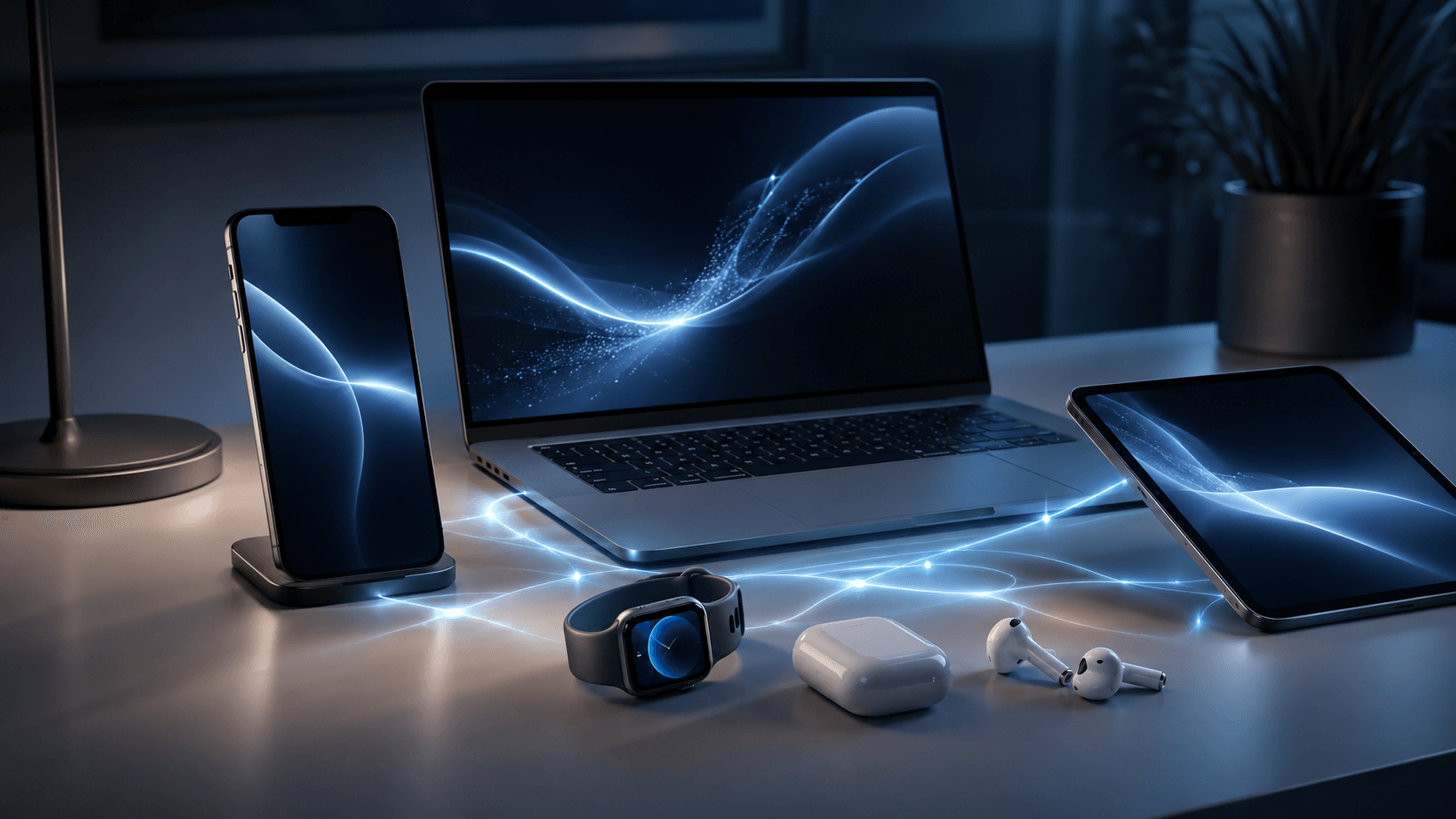
Apple is not just another tech company adding AI features because everyone else is doing it. Apple controls the iPhone, iPad, Mac, Apple Watch, AirPods, Vision Pro, and the operating systems that connect them.
That means Apple AI has a unique advantage: it can live directly inside the devices people already use every day.
Instead of opening a separate chatbot app, Apple wants intelligence to appear inside the system:
- In Messages
- In Mail
- In Safari
- In Photos
- In Notes
- In Calendar
- In Siri
- Across iOS, iPadOS, macOS, watchOS, and visionOS
This is what makes Apple’s AI strategy interesting. Apple does not need to win by building the loudest chatbot. It can win by making AI feel native, personal, and practical.
For everyday users, that means fewer steps. For developers, it means new opportunities. For Apple, it means protecting the value of the entire ecosystem.
Apple Intelligence: The Foundation of Apple AI
Apple Intelligence is Apple’s personal intelligence system. It is designed to help users write, summarize, organize, create, and take action while keeping privacy at the center.
The current direction is clear: Apple wants AI to be deeply integrated, but not overwhelming.
Instead of turning the iPhone into a full chatbot interface, Apple is building AI into familiar experiences. That includes tools for rewriting text, summarizing notifications, cleaning up images, translating conversations, and helping users focus on what matters.
What Apple Intelligence Already Tells Us
Apple’s AI strategy is built around three major ideas:
- Personal context
Apple wants AI to understand your apps, messages, files, photos, reminders, and daily habits. - On-device processing
Many tasks should happen directly on your iPhone, iPad, or Mac for speed and privacy. - Private cloud support
More complex tasks may use Apple’s secure cloud systems when the device alone is not enough.
This is very different from the traditional chatbot model. Apple wants AI to become part of the operating system itself.
That could be Apple’s biggest advantage in 2026.
Siri in 2026: The Make-or-Break Moment
Let’s be honest: Siri has been one of Apple’s most frustrating products for years.
It was early to voice assistants, but it never became the powerful digital helper many users expected. In 2026, that may finally change.
Apple has been working on a more personal, more capable Siri that can understand context and take actions across apps. This is the kind of upgrade users have wanted for a decade.
What a Smarter Siri Could Do
A next-generation Siri in 2026 could be able to handle requests like:
- “Find the email from my client and summarize the key points.”
- “Move my meeting and tell Jane I’ll be late.”
- “Create a reminder from this message.”
- “Find the photo from our trip and make it look brighter.”
- “Compare these two documents and show me the differences.”
- “Book this into my calendar and add the address.”
This is where Apple AI becomes exciting. A smarter Siri would not just answer questions. It would perform useful actions inside your Apple ecosystem.
That is the difference between a voice assistant and a true AI agent.
Apple AI and Privacy: Still the Biggest Selling Point
Apple’s biggest AI message is not speed. It is not hype. It is privacy.
That matters because many users are still uncomfortable sending personal data into AI systems. Emails, photos, health data, contacts, messages, and documents are extremely sensitive.
Apple knows this. And privacy is one of the few areas where Apple can clearly separate itself from competitors.
Why Privacy Could Help Apple Win AI
Apple’s privacy-first AI strategy could appeal to users who want helpful AI without feeling exposed.
The key promise is simple: your personal data should stay personal.
That means Apple AI may become especially attractive for:
- Families
- Business users
- Students
- Creators
- Developers
- Health and fitness users
- Professionals working with sensitive data
If Apple can deliver powerful AI while keeping trust high, it could become the default AI choice for millions of people who do not want to manage multiple third-party tools.
iOS AI in 2026: What iPhone Users Should Expect
The iPhone will likely remain the center of Apple’s AI strategy in 2026. It is the device most people carry everywhere, and it already has access to the user’s most important daily information.
In 2026, expect Apple AI to become more proactive, more contextual, and more useful inside iOS.
Possible iPhone AI Features in 2026
Here are the types of features Apple users should watch for:
- Smarter notification summaries
- More useful Siri actions across apps
- Better AI writing tools
- More natural voice interaction
- AI-powered photo editing
- Context-aware suggestions
- Improved live translation
- Smarter search inside the iPhone
- AI support inside Messages, Mail, Notes, and Safari
The biggest change may not be one single feature. It may be the feeling that your iPhone understands more of what you are trying to do.
That is where Apple can shine.
The best Apple AI feature will be the one that saves time without making users think about AI at all.
Apple AI on Mac: A Big Opportunity for Productivity
The Mac could become one of the most powerful Apple AI devices in 2026.
Why? Because Mac users often work with longer documents, code, presentations, spreadsheets, creative projects, and professional workflows. AI can be extremely useful in those areas.
What Apple AI Could Bring to Mac Users
For Mac users, Apple AI could improve:
- Writing and editing
- Email management
- Document summaries
- Code assistance
- File search
- Meeting notes
- Research workflows
- Creative apps
- Automation with Shortcuts
Imagine asking your Mac: “Summarize all PDFs in this folder and create a comparison table.”
Or: “Find the latest version of this project and explain what changed.”
That is the kind of AI workflow that could make macOS feel dramatically smarter.
For developers and creators, this could be huge.

Apple AI for Developers: Why 2026 Could Be Important
Developers are one of the most important audiences for Apple AI in 2026.
If Apple wants AI to become truly useful, third-party apps need to be part of the system. Apple can build great features into its own apps, but the ecosystem becomes much more powerful when developers can connect their apps to Apple Intelligence and Siri.
What Developers Should Watch
Developers should pay attention to:
- New Apple Intelligence APIs
- Siri app intents
- Shortcuts improvements
- On-device AI tools
- Xcode AI features
- App Store AI guidelines
- Privacy rules for AI-powered apps
- Better automation between apps
If Apple gives developers strong AI tools, we could see a new generation of smarter iPhone and Mac apps.
For example, a fitness app could create personalized workout summaries. A finance app could explain spending patterns. A travel app could build smart itineraries. A productivity app could turn messages into tasks automatically.
The future of Apple AI depends heavily on how much power Apple gives developers.
The Role of On-Device AI
On-device AI may become one of Apple’s biggest technical advantages.
Apple controls its chips, including the A-series chips in iPhones and the M-series chips in Macs and iPads. These chips are already highly efficient, and Apple has spent years improving machine learning performance.
That gives Apple a strong foundation for local AI processing.
Why On-Device AI Matters
On-device AI can offer several major benefits:
- Faster responses
- Better privacy
- Offline functionality
- Lower cloud costs
- More natural system integration
- Improved battery efficiency over time
This is especially important for everyday tasks like rewriting text, searching photos, summarizing notifications, or understanding simple voice commands.
Not every AI task can run locally. But the more Apple can do directly on the device, the more reliable and private the experience becomes.
Will Apple Use Outside AI Models?
One of the biggest questions in 2026 is whether Apple will rely only on its own AI models or continue working with outside AI companies.
Apple has already shown that it is willing to connect users to external AI tools in certain situations. This makes sense. Building a world-class large language model is expensive, difficult, and fast-moving.
Apple does not necessarily need to win the model race alone.
Instead, Apple could focus on the user experience layer:
- Privacy
- Device integration
- App actions
- Personal context
- Smooth design
- Security
- Developer tools
This could be a smart strategy. Apple can use the best available models where needed while keeping the Apple experience controlled and polished.
In 2026, Apple AI may be less about one model and more about the entire intelligent operating system.
Apple AI vs ChatGPT, Gemini, and Copilot
Apple is entering a market where other companies already have strong AI products.
ChatGPT is popular for conversation and content creation. Gemini is deeply connected to Google’s ecosystem. Microsoft Copilot is built into productivity workflows. Samsung is pushing AI features across smartphones.
So where does Apple fit?
Apple’s Advantage
Apple’s advantage is not being first. It is being integrated.
Apple AI can potentially understand:
- Your apps
- Your calendar
- Your messages
- Your photos
- Your files
- Your device settings
- Your Apple ecosystem
That gives Apple a chance to build AI that feels more personal than a general chatbot.
Apple’s Challenge
The challenge is speed.
Users now expect AI to be powerful, conversational, and flexible. If Apple moves too slowly, it risks looking behind. Siri especially needs a major leap.
Apple does not need to copy ChatGPT. But it does need to prove that Apple Intelligence is genuinely useful.
What Everyday Apple Users Should Expect
For normal iPhone, iPad, and Mac users, Apple AI in 2026 will probably feel like a collection of small but meaningful upgrades.
Not every feature will be revolutionary. But many could save time.
Most Useful Everyday AI Features
The most useful features may include:
- Better Siri conversations
- Faster message replies
- Email summaries
- Photo cleanup and editing
- Smarter reminders
- Calendar help
- Translation during calls and chats
- Summaries of long articles
- Better search across apps
The key is convenience.
If Apple AI helps users save five minutes here and ten minutes there, it becomes valuable very quickly.
What Tech Enthusiasts Should Watch Closely
For tech enthusiasts, 2026 will be fascinating because Apple’s AI strategy could reveal where the entire industry is heading.
The big things to watch are:
- How smart Siri becomes
Can Siri finally handle complex, multi-step tasks? - How much runs on-device
Apple’s chips could become a major AI advantage. - How Apple handles privacy
Privacy could be the biggest differentiator. - How developers get access
Strong APIs could unlock a new app ecosystem. - How Apple balances its own AI with external models
The best user experience may combine both.
Potential Risks for Apple AI in 2026
Apple has huge opportunities, but there are also real risks.
1. Siri May Still Disappoint
If Siri’s upgrade feels limited, users may lose patience. Apple has promised smarter assistant experiences before, and expectations are now extremely high.
2. Features May Be Region-Limited
Apple Intelligence features may not arrive everywhere at the same time. Language support, regulation, and device compatibility could limit availability.
3. Older Devices May Miss Out
Advanced AI features often require newer chips. Users with older iPhones, iPads, or Macs may not get the full experience.
4. Developers May Need More Freedom
If Apple keeps AI tools too restricted, third-party apps may not be able to create truly powerful experiences.
5. Competitors Are Moving Fast
OpenAI, Google, Microsoft, Samsung, and others are not slowing down. Apple must deliver real value, not just beautiful demos.
What This Means for the Future of Apple
Apple AI in 2026 is about more than Siri or iOS. It is about the future of the Apple ecosystem.
If Apple succeeds, AI could become the invisible layer connecting every device and app. Your iPhone could understand your day. Your Mac could organize your work. Your Apple Watch could give better health insights. Your Vision Pro could become more useful. Your AirPods could become smarter real-time assistants.
That is the bigger picture.
Apple does not just want to add AI features. It wants to make its ecosystem feel intelligent.
Final Thoughts: 2026 Could Be Apple AI’s Defining Year
Apple AI in 2026 could be one of the most important technology stories of the year.
Users are ready. Developers are watching. Competitors are moving fast. And Apple needs to prove that Apple Intelligence is more than a branding exercise.
The most exciting possibility is not that Apple builds another chatbot. The exciting possibility is that Apple turns the iPhone, Mac, iPad, Apple Watch, and Siri into a connected personal intelligence system.
That would be very Apple.
Quiet. Useful. Private. Deeply integrated.
If Apple gets it right, 2026 may be remembered as the year Apple AI finally became real.
And for everyday users, that could mean one simple thing: your Apple devices may finally start feeling as smart as they always looked.