Apple WWDC 2026 is not just another yearly software showcase. This year’s Apple Event feels like a major reset because Apple finally put Siri AI, Apple Intelligence, iOS 27, and macOS 27 Golden Gate at the center of its future.
For everyday users, the big question is simple: what will actually change on your iPhone, Mac, iPad, Apple Watch, and Apple services? The answer is bigger than a normal software update, because Apple is now trying to turn AI into a system-wide feature.
Apple WWDC 2026: Why This Event Matters
Apple WWDC has always been the place where Apple shows the future of its platforms. Developers watch for APIs, tools, and design changes, while regular users follow the keynote because it previews what their devices will feel like later in the year.
The biggest insight from Apple WWDC 2026 is that Apple’s software story is now an AI story. Instead of treating artificial intelligence as a side feature, Apple is building it deeper into Siri, search, writing tools, apps, and the operating system itself.
That matters because Apple controls the full stack. It controls the hardware, software, chips, privacy systems, app ecosystem, and services. When Apple changes the intelligence layer of its devices, millions of people feel that change very quickly.
The headline themes are clear:
- iOS 27 brings the next major iPhone software experience.
- Siri AI becomes Apple’s big assistant comeback.
- Apple Intelligence becomes more central across devices.
- Google Gemini now plays a major role behind the new Siri AI architecture.
- macOS 27 Golden Gate focuses on performance, design polish, search, and AI.
- iPhone 2026 will likely be judged by smart software as much as hardware.
This is why Apple WWDC 2026 matters beyond developers. It gives us the clearest look yet at Apple’s AI strategy.
iOS 27: The iPhone Gets Smarter
iOS 27 is one of the biggest reasons people follow Apple WWDC. Even if you never build an app, the new iOS version decides how your iPhone will feel for the next year.
This time, the spotlight is not only on icons, design polish, or small app improvements. It is on intelligence. Apple wants the iPhone to become more helpful in the background, more aware of context, and better at understanding what you need without forcing you through several menus.
The most important iOS 27 shift is that AI becomes part of the daily iPhone experience, not just a separate chatbot. That is Apple’s preferred approach: less “open an AI app” and more “your device helps you where you already are.”
For users, that could mean smarter help in Messages, Mail, Photos, Calendar, Safari, Notes, Camera, and productivity apps. Instead of asking your phone a basic command and getting a basic reply, the goal is a more natural experience that understands context.
Useful daily examples could include:
- Asking your iPhone to find a detail from an old message.
- Summarizing a long email thread.
- Searching across files, photos, and apps with natural language.
- Creating reminders or calendar events from visible content.
- Using AI writing tools without switching apps.
- Getting smarter suggestions based on what is currently on screen.
This is where iOS 27 becomes especially interesting for iPhone 2026. The next iPhone generation will not only compete through cameras, chips, and displays. It will compete through how useful the device feels in real life.
Siri AI: Apple’s Biggest Assistant Upgrade
Siri has been part of Apple devices for years, but many users felt it had fallen behind ChatGPT, Gemini, Claude, and other modern AI assistants. Apple WWDC 2026 changes the conversation with Siri AI.
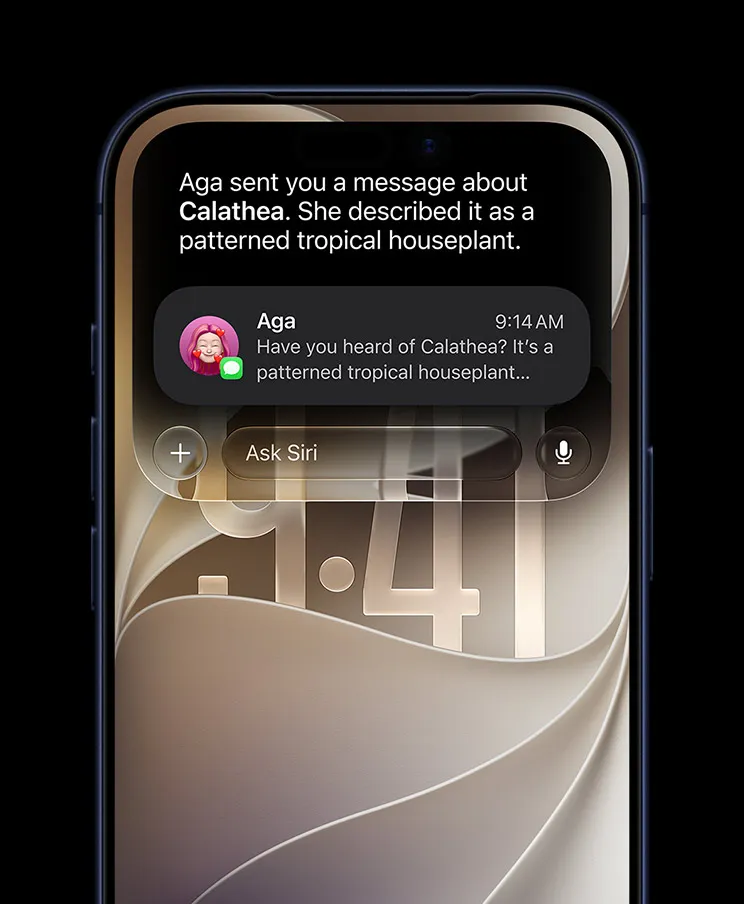
Siri AI is designed to be more conversational, more personal, and more useful across the system. Instead of only handling timers, weather, calls, and simple commands, the upgraded assistant aims to understand what is happening on your device and help you act on it.
The biggest Siri AI change is that it is powered by Apple Intelligence with Google Gemini technology behind the new foundation model layer. That is a major shift because Apple is no longer presenting Siri as only a traditional voice assistant or a simple handoff to third-party chatbots.
This Google partnership is one of the most discussed parts of Apple WWDC 2026. It shows that Apple is willing to use outside AI strength while still wrapping the experience in Apple’s privacy-focused design and system integration.
For everyday users, this could become powerful in small moments. You might ask Siri to find a restaurant someone mentioned, pull up a document, compare information, summarize a conversation, or help with a task based on what is already visible on screen.
The promise is simple: less tapping, less searching, less app switching.
Siri AI Pricing and EU Availability
One important detail should not be missed: Siri AI is not simply launching everywhere in the same way. Apple is making the standard Siri AI experience free with the new software releases, but heavier usage is expected to have limits.
The practical takeaway is that Siri AI is free for normal use, but heavier AI requests may require extra usage through iCloud+. Early coverage says Apple will include a daily usage allowance and offer more through iCloud+, although exact pricing and allowance size were not fully detailed at keynote time.
This matters because it turns Siri AI into both a software feature and a services story. Apple has a huge iCloud+ user base, and advanced AI usage could become another reason for people to stay inside the Apple ecosystem.
There is also a major regional catch. Siri AI will not launch on iPhone and iPad in the European Union at first. Apple says the delay is connected to regulatory issues, especially around how AI assistants interact with device access, privacy, and system control.
For EU users, this is frustrating but important. iOS 27 and iPadOS 27 will still bring other improvements, but the full Siri AI experience on iPhone and iPad will not be available in the EU at launch.
Apple Intelligence Becomes the Centerpiece
Apple Intelligence was already an important Apple topic, but Apple WWDC 2026 pushes it deeper into the full experience. This is not only about flashy AI demos. It is about building intelligence into the places where users already spend time.
The biggest Apple Intelligence opportunity is usefulness without friction. If Apple can make AI feel natural, private, and fast, users may adopt it without thinking of it as a separate product.
That is different from many AI tools on the market. Most AI products ask users to open a new app, write a prompt, wait for an answer, and manually move the result into another workflow. Apple wants intelligence to feel like a built-in layer across the device.
Important areas to watch include:
- Writing help across apps.
- Visual Intelligence for understanding images and screen content.
- Smarter search across personal information.
- AI-powered shortcuts and automation.
- Context-aware Siri AI responses.
- Developer tools that let apps connect with Apple Intelligence.
For app developers, this is huge. If Apple gives developers better ways to connect their apps with Siri, Spotlight, Shortcuts, and Apple Intelligence, apps could become easier to use without needing complex menus.
For users, the benefit is even simpler. Your Apple devices should feel less passive and more helpful.
Device Compatibility: Who Gets Siri AI?
The compatibility picture is now much clearer. iOS 27 may support older iPhones, but the newest Apple Intelligence and Siri AI features need newer hardware.
The key point is that not every iPhone that gets iOS 27 will get the full Siri AI experience. Apple Intelligence requires specific chips and device models, so users with older devices may receive the operating system update without the headline AI features.
The main supported Apple Intelligence device group includes:
- iPhone 16 models and later.
- iPhone 15 Pro and iPhone 15 Pro Max.
- iPad mini with A17 Pro.
- iPad models with M1 or later.
- Mac models with M1 or later.
- Apple Vision Pro.
- Supported Apple Watch models when paired with an Apple Intelligence-enabled iPhone.
This is important for buying decisions. If you are planning an iPhone 2026 upgrade, the question is no longer only “How good is the camera?” It is also “Will this device support the best Apple Intelligence and Siri AI features?”
For many users, that could become a real reason to upgrade.
macOS 27 Golden Gate: The Mac Gets a Smarter Foundation
The Mac update also needed a small naming clarification. Apple’s new Mac software is best described as macOS 27 Golden Gate. Golden Gate is the subtitle, while macOS 27 follows Apple’s broader 2026 operating system numbering convention.
That means Apple is aligning its platforms more clearly: iOS 27, iPadOS 27, macOS 27, tvOS 27, watchOS 27, and visionOS 27. This makes the ecosystem feel cleaner and easier to understand.
The biggest macOS 27 Golden Gate takeaway is that the Mac is becoming more AI-aware without losing its productivity focus. Apple is not trying to turn macOS into a gimmick. It is trying to make the Mac faster, cleaner, and more helpful for real work.
The search upgrade is especially important. Apple rebuilt the foundation behind Search across Spotlight, Mail, and Photos to make indexing more stable, efficient, and complete. New files and content should become searchable almost immediately, which is a practical improvement for anyone who works with lots of documents, screenshots, photos, emails, or project files.
This supports the new Siri AI direction perfectly. If Siri AI depends on understanding your files, screen content, emails, and personal context, the underlying search index has to be strong.
macOS 27 Golden Gate also continues Apple’s visual refinement around Liquid Glass. The goal appears to be more polish, better readability, and a more consistent interface across Apple devices.
Tim Cook’s Final WWDC as CEO
Apple WWDC 2026 also had a major leadership story. This was Tim Cook’s final WWDC as Apple CEO before John Ternus takes over on September 1.
Cook’s closing message gave the event a more personal tone. After years of leading Apple through the iPhone era, services growth, Apple Silicon, privacy positioning, and global supply chain challenges, Cook used the keynote moment to thank developers and reflect on Apple’s creative community.
The leadership transition matters because John Ternus arrives at a time when Apple needs to prove its AI future. Ternus is known for hardware engineering, and his biggest challenge may be connecting Apple’s hardware strength with a stronger AI software story.
That makes the timing interesting. Apple is entering a new AI phase just as it enters a new CEO era. The next few years could define whether Apple becomes a true AI platform leader or continues to play catch-up.
For readers, this context matters because WWDC 2026 is not only about features. It is also about the direction of Apple after Tim Cook.
What This Means for iPhone 2026
Apple WWDC 2026 is a software event, but it also gives us clues about iPhone 2026. Future iPhones will not only be judged by megapixels, screen brightness, battery life, or chip speed.
They will be judged by how smart the whole experience feels.
The iPhone 2026 story will likely be about AI-powered usefulness. A faster chip matters because AI features need power. More memory matters because advanced intelligence needs room to work. Better cameras matter because Visual Intelligence can turn the camera into a real-world search tool.
This is where hardware and software meet. If Siri AI, Apple Intelligence, and iOS 27 are the software foundation, then iPhone 2026 hardware will likely be built to make those features faster, smoother, and more private.
For buyers, this creates a new checklist:
- Can this iPhone run the best Apple Intelligence features?
- Is Siri AI fast and useful on this model?
- Does the device support the newest iOS 27 tools?
- Will AI tools work locally, privately, and smoothly?
- Is the upgrade worth it for daily productivity?
That is exactly why WWDC matters even before the next iPhone launch.
Developers May Be the Real Winners
WWDC is still a developer conference, and developers are a huge part of this story. When Apple changes Siri, search, Apple Intelligence, and platform tools, it can reshape how apps work.
The most important developer opportunity is making apps easier to use through system-level intelligence. If users can ask Siri or Spotlight to perform tasks inside third-party apps, developers get a new way to make their apps feel powerful.
Imagine a travel app that can surface booking details through Siri AI. Or a finance app that lets users ask natural questions about spending. Or a learning app that connects with Apple Intelligence to create personalized study help.
For indie developers, this could be a major chance. Smaller apps often struggle to compete with big platforms, but smart system integration can make a focused app feel premium.
The challenge is also real. Developers will need to understand new APIs, privacy rules, testing workflows, device limits, and user expectations. AI features must be useful, not gimmicky.
Child Safety and Family Controls Got Real Attention
Apple also spent meaningful time on child safety and parental controls. That may not be the flashiest part of Apple WWDC 2026, but it matters for families.
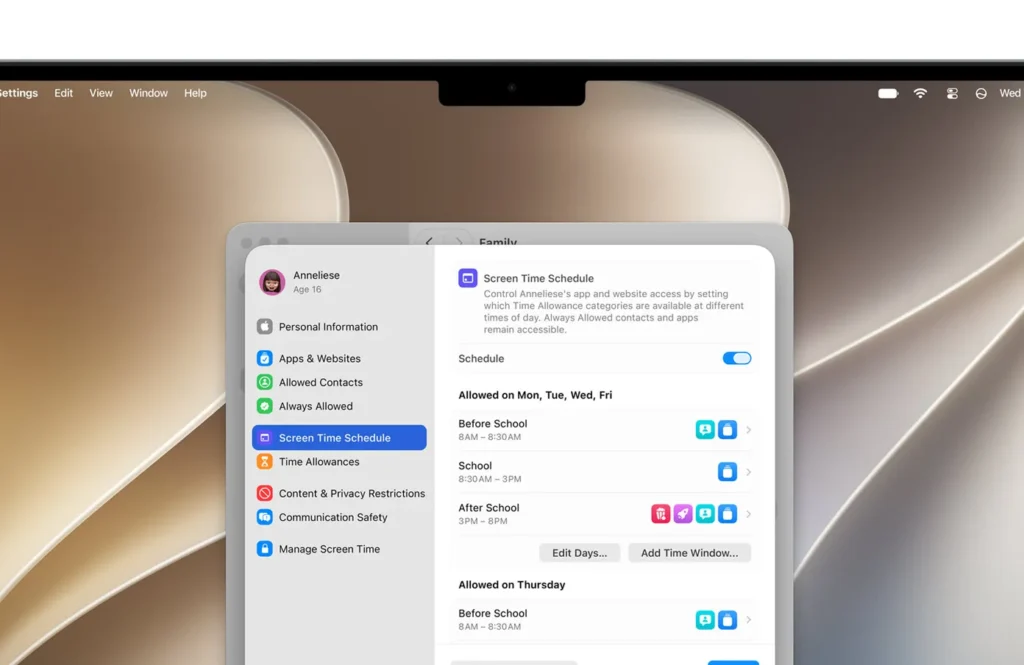
The most important family update is that Apple is making child accounts and age-appropriate protections more central to the system. Child accounts are mandatory for users under 13 and available up to 18, helping parents apply age-based safeguards across Apple devices.
Apple also expanded tools around communication safety, web browsing permission, app access, and Screen Time. These changes are especially relevant as AI features become more common inside apps and operating systems.
For parents, the key benefit is control without needing to understand every technical detail. The system should help set safer defaults and make it easier to adjust access as kids grow.
The Privacy Question
Apple always talks about privacy, and with AI, that message becomes even more important. Users may like smarter assistants, but they also worry about personal data, messages, emails, photos, location information, and private files.
The key trust factor is whether Apple can make personal AI feel powerful without making users uncomfortable. That balance will define how successful Siri AI and Apple Intelligence become.
Apple’s advantage is that many users already trust the company more than other tech brands with device-level privacy. But trust is not automatic. Apple must clearly explain what happens on-device, what uses private cloud systems, what data is accessed, and how users can control it.
For normal users, the best AI is invisible until needed. It helps, explains, suggests, organizes, and automates without feeling creepy. That is a difficult line to walk, but it is exactly the kind of problem Apple likes to solve through design.
Should You Be Excited or Cautious?
The exciting part is obvious. Apple WWDC 2026 suggests that Apple is finally treating AI as a core platform feature. Siri AI, iOS 27, Apple Intelligence, Gemini-powered models, and macOS 27 Golden Gate all point in the same direction.
But it is smart to be cautious. AI announcements can sound amazing on stage and feel less impressive in daily life. The real test will be speed, accuracy, device support, language support, regional availability, and how often people actually use these features after the first week.
The smart reaction is excitement with realistic expectations. Apple is making the right moves, but the quality of execution will matter more than keynote hype.
If Siri AI works reliably, it could become the upgrade that finally makes Siri feel modern. If iOS 27 makes Apple Intelligence more useful across apps, the iPhone could become a much better daily assistant. If macOS 27 Golden Gate improves search and performance, Mac users could feel the benefit immediately.
Frequently Asked Questions
What is Apple WWDC 2026?
Apple WWDC 2026 is Apple’s Worldwide Developers Conference for 2026. It is where Apple previews major software updates, developer tools, platform changes, and new technologies for iPhone, Mac, iPad, Apple Watch, Apple TV, and Vision devices.
What did Apple announce at WWDC 2026?
The biggest highlights include iOS 27, Siri AI, Apple Intelligence upgrades, Google Gemini-powered AI improvements, macOS 27 Golden Gate, rebuilt search, and new child safety features. The event focused strongly on AI, smarter system features, developer tools, and software polish.
Is Siri AI powered by Google Gemini?
Yes, the new Siri AI uses Apple Intelligence with Google Gemini technology playing a major role in the next-generation model architecture. Apple is still presenting the experience as privacy-focused and deeply integrated into Apple devices.
Which iPhones support Siri AI in iOS 27?
The full Siri AI and Apple Intelligence experience requires newer hardware, including iPhone 16 models and later, plus iPhone 15 Pro and iPhone 15 Pro Max. Older iPhones may still get iOS 27, but they may not receive the full AI feature set.
What is macOS 27 Golden Gate?
macOS 27 Golden Gate is Apple’s next major Mac operating system update. Golden Gate is the subtitle, while macOS 27 follows Apple’s 2026 naming convention alongside iOS 27, iPadOS 27, watchOS 27, tvOS 27, and visionOS 27.
Conclusion: Apple WWDC 2026 Is About Apple’s Next AI Era
Apple WWDC 2026 feels important because it connects everything Apple has been building toward: smarter devices, more helpful software, better search, stronger privacy messaging, and AI features that live inside the system instead of sitting in a separate app.
The biggest takeaway is that Apple is turning AI into a platform layer. iOS 27, Siri AI, Apple Intelligence, Google Gemini, macOS 27 Golden Gate, and the future iPhone 2026 experience all point toward a more personal, more connected Apple ecosystem.
There is still a lot to prove. Siri AI needs to work well, EU availability remains a major issue, pricing details need clarity, and users need real benefits instead of keynote magic. But if Apple delivers, WWDC 2026 could be remembered as the moment Siri finally grew up.
Want more fast, simple tech breakdowns? Follow tech-play.net for Apple Event coverage, AI updates, app guides, and beginner-friendly tech news that actually makes sense.