There was a time when you bought software once and owned it.
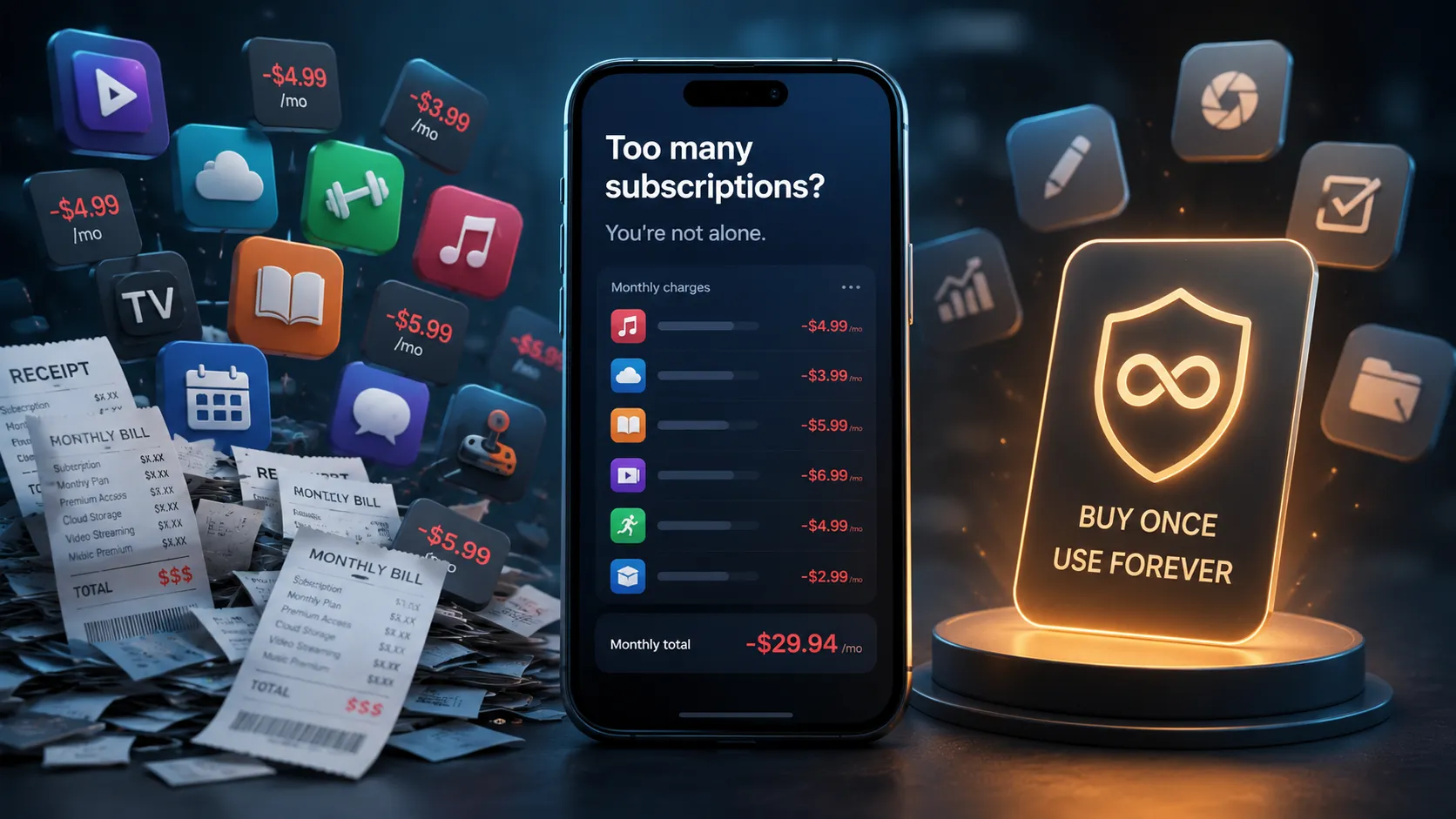
Now? Your notes app wants €4.99 per month. Your weather app has a premium plan. Your fitness app locks basic features behind a subscription. Even simple phone tools sometimes feel like they are trying to become Netflix.
And honestly? People are getting tired of it.
Subscriptions made sense at first. But in 2026, the subscription model is starting to feel overused, overpriced, and annoying. The big question is simple: are we heading toward a comeback of one-time purchase apps?
The Subscription Explosion Went Too Far
Subscriptions were originally created for services that constantly deliver new value.
Streaming platforms made sense. Cloud storage made sense. Online tools that need servers, updates, support, and syncing also made sense.
But then the model spread everywhere.
Suddenly, even small apps started asking for monthly payments. Want a better calculator? Subscription. Want to remove ads from a simple habit tracker? Subscription. Want dark mode, widgets, or basic customization? Subscription.
For users, the problem is not one single payment. The problem is that everything adds up.
A few euros here. A few euros there. Before you realize it, your phone is full of tiny monthly charges that feel small individually but become expensive together.
That is where subscription fatigue begins.
People Want Control Again
The big problem with subscriptions is psychological.
When you pay once, the transaction feels finished. You bought the app. You own access. Done.
With a subscription, the app keeps asking for a place in your monthly budget. It has to justify itself again and again.
That creates pressure.
Users start asking: “Do I really use this enough?”
“Is this worth another month?”
“Why am I still paying for this?”
And once people begin checking their subscriptions, many apps do not survive the review.
This is why one-time purchase apps can feel refreshing. They are simple. Clear. Honest.
You pay once, unlock the feature, and move on.
Not Every App Needs a Monthly Plan
Some apps truly need subscriptions.
If an app uses expensive servers, offers cloud sync, provides fresh content, or has ongoing services, a subscription can be fair. Nobody expects developers to run infrastructure for free.
But many apps do not need that model.
A local calculator app does not need a monthly fee. A simple offline productivity tool does not always need recurring billing. A small game without live services does not automatically need a subscription.
That is where users get frustrated.
It is not that people refuse to pay. Many users are happy to support good software. The problem is when the payment model feels disconnected from the value.
If the app gives a simple tool, a simple payment often feels better.
One-Time Purchases Feel More Honest
One-time purchase apps have a strong advantage: trust.
There is no hidden monthly cost. No confusing trial. No fear of forgetting to cancel. No feeling that the app is quietly draining your account.
For everyday users, that matters.
A clean price can actually make an app more attractive:
“Buy once for €4.99.”
“Unlock Pro forever.”
“No subscription.”
Those words are powerful because they reduce friction. People immediately understand what they are getting.
In a world full of recurring payments, a one-time purchase can become a selling point again.
It feels almost old-school — but in a good way.
Developers Still Need to Make Money
Of course, there is another side to this.
Developers need income. Apps require updates, bug fixes, design improvements, customer support, and platform maintenance. Apple and Google change rules. Devices change. Operating systems change.
A one-time purchase can be risky for developers because the income does not continue forever.
That is why many developers moved to subscriptions in the first place. Recurring revenue makes a business more predictable.
But there are other models too.
Apps can offer:
- One-time Pro upgrades
- Paid feature packs
- Optional tips
- Lifetime licenses
- Ads with a paid remove-ads option
- Subscriptions only for cloud or premium services
The best model depends on the app. But the key is fairness. Users do not hate paying. They hate feeling trapped.
The Apps That Win Will Feel Fair
The future may not be “subscription vs. one-time purchase.”
It will be about trust.
Users are becoming smarter. They compare value faster. They cancel faster. They avoid apps that feel too aggressive.
The apps that win will be the ones that make pricing clear and reasonable.
If the app needs ongoing servers, explain it.
If the app works offline, maybe offer a one-time upgrade.
If the app has ads, give users a fair way to remove them.
Simple, honest pricing can become a real competitive advantage.
Because in 2026, people do not just download apps. They judge the business model behind them.
Final Thoughts: The Comeback of “Buy Once”
Subscriptions are not going away. They are too useful for many businesses.
But the “everything must be monthly” era is starting to feel tired.
For many small tools, games, and productivity apps, one-time purchases could make a comeback. Not because they are old-fashioned, but because they feel simple, transparent, and user-friendly.
And maybe that is exactly what people want again.
Less pressure. Fewer monthly bills. More apps that simply do what they promise.
Would you rather pay once for an app — or keep paying every month?