BYD overtakes Ford. For most drivers outside China, that still sounds like a prediction rather than something that has already happened.
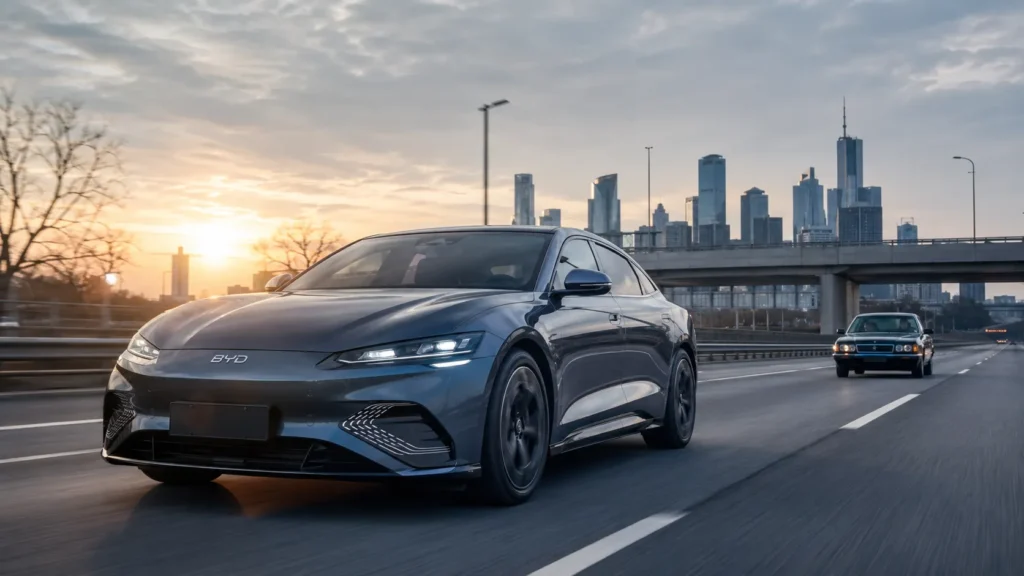
In 2025, the Chinese automaker sold more than 4.6 million New Energy Vehicles, passed Ford by global volume and became the world’s sixth-largest automaker. Now its next major test is Europe—and especially Germany.
For more than a century, Ford has represented industrial scale. BYD’s rise shows just how quickly the centre of the automotive industry is moving toward China.
BYD sold more than 4.6 million New Energy Vehicles during the year, passing Ford and becoming the world’s sixth-largest automaker by volume. That does not mean BYD is automatically more profitable or valuable than Ford. But it does reveal how quickly the centre of the automotive industry is shifting.
And BYD is no longer winning only in China.
After establishing itself as the world’s largest seller of electrified cars, the company is moving deeper into Europe, building vehicles inside the European Union and setting an ambitious target in the most symbolically important market of all: Germany.
BYD Overtakes Ford: The Cost Advantage Behind the Shift
BYD’s 4.6 million total includes both battery-electric vehicles and plug-in hybrids.
A battery-electric vehicle, or BEV, runs entirely on electricity. A plug-in hybrid, or PHEV, combines a rechargeable battery with a combustion engine, allowing shorter journeys on electricity while retaining petrol power for longer trips.
China groups both types under the broader term “New Energy Vehicles,” or NEVs.
That distinction matters when comparing BYD with Tesla, which sells only battery-electric cars. On a like-for-like BEV basis, however, BYD is now ahead there too.
In the second quarter of 2026, BYD delivered 557,090 battery-electric vehicles, compared with Tesla’s 480,126. That gave BYD a lead of roughly 16%. Across the full first half of the year, BYD remained ahead by 867,479 vehicles to Tesla’s 838,149.
This did not happen because BYD simply copied the Western automotive model more cheaply.
It built a different kind of company.
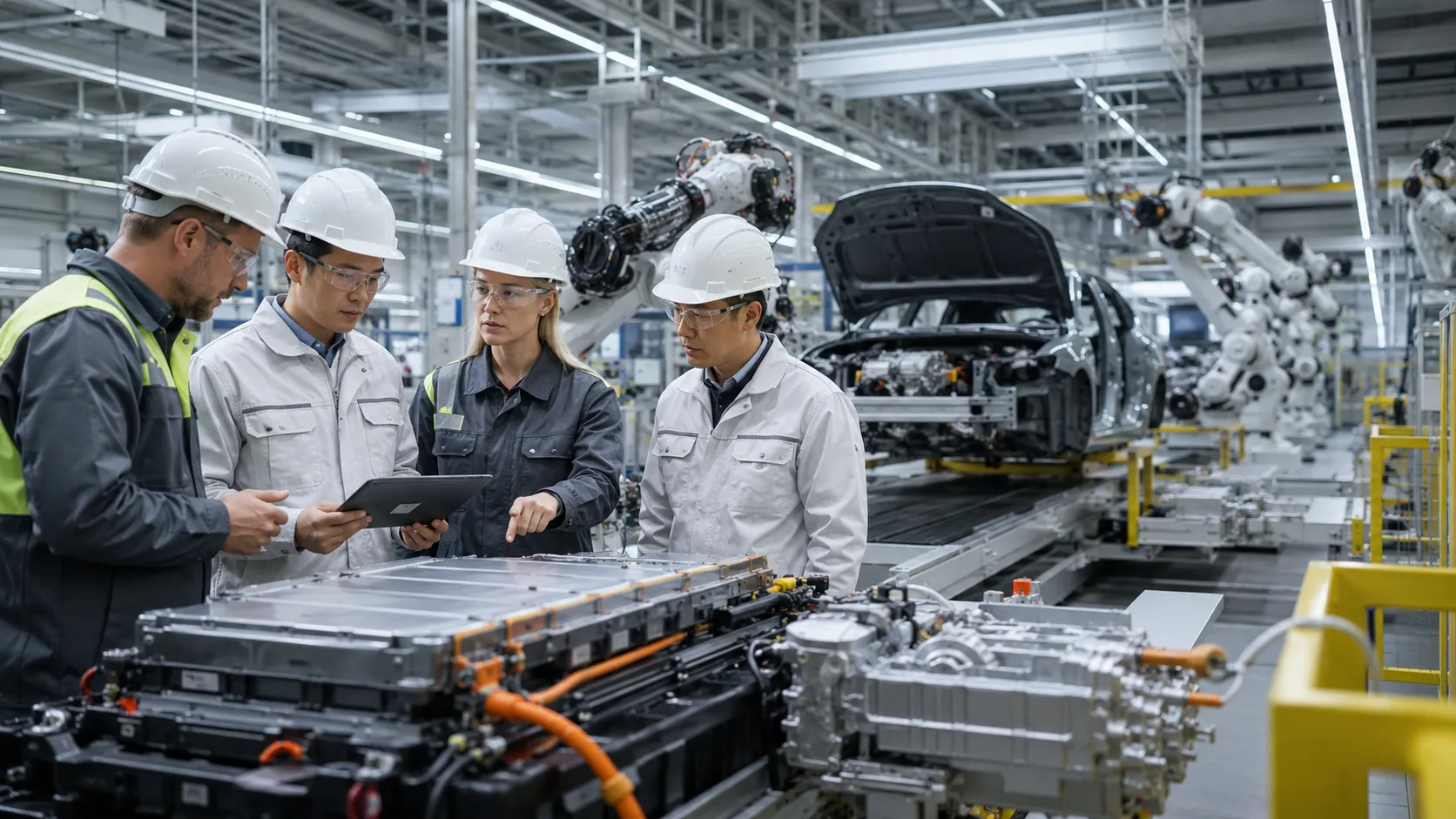
The Factory Is BYD’s Real Product
Traditional carmakers rely on enormous networks of specialist suppliers. One company provides batteries, another supplies motors, another develops electronic control units, and another writes part of the software.
BYD makes much of that critical technology itself.
Its operations cover batteries, electric motors, drivetrains, control systems, semiconductors and software. Keeping these technologies inside the group gives BYD more control over cost, supply and development speed.
Think of two restaurants selling similar meals. One buys its ingredients, sauces, desserts and delivery service from separate companies. The other owns the kitchen, bakery, warehouse and delivery fleet. The second business has more ways to reduce costs or change the menu without negotiating with five suppliers first.
That is the industrial advantage BYD brings into a price-sensitive EV market.
The company also committed earlier than most traditional manufacturers. In 2022, BYD stopped producing cars powered only by internal-combustion engines and concentrated entirely on battery-electric and plug-in-hybrid vehicles.
Meanwhile, companies including Ford and Toyota have delayed, redesigned or cancelled parts of their electric-vehicle plans. Toyota has already worked with BYD on vehicles and battery technology, while Ford has discussed sourcing batteries from BYD for hybrid vehicles produced outside the United States. Those talks underline the reversal: established automakers are increasingly looking to a former challenger for core technology.
BYD vs Volkswagen: Pressure in Both Directions
For years, the debate around Chinese cars in Europe focused on what might happen in the future.
In May 2026, the future became a sales result.
BYD, SAIC, Geely, Chery and Leapmotor sold more than 138,000 vehicles across 31 European markets during the month. Together, the five Chinese groups captured 12% of the market.
Japanese manufacturers held 11.3%.
It was the first time Chinese automakers had collectively outsold Japanese brands in Europe during a month—a significant milestone in a region where Toyota, Nissan, Honda, Mazda, Suzuki and Mitsubishi have spent decades building factories, dealerships and customer trust.
European tariffs were supposed to slow this advance.
Chinese-made battery-electric vehicles can face total import duties of as much as 45.3%, combining the EU’s normal 10% car-import tariff with additional anti-subsidy duties. The precise rate varies between manufacturers.
Chinese automakers have responded in two ways.
First, they have increased their emphasis on plug-in hybrids. PHEVs have not been covered by the same additional duties imposed on Chinese-built battery-electric vehicles, making them a useful bridge into European markets.
This is sometimes described as a “tariff dodge,” but it does not mean illegally avoiding tax. It means changing the product being imported so that it falls under different customs rules.
Second, BYD is becoming a European manufacturer.
Trial production began at its first European passenger-car factory in Szeged, Hungary, in January 2026. The plant was intended to move toward series production during the second quarter. Cars built there can serve European customers without being imported from China as finished vehicles.
That changes the political and commercial story. BYD is no longer merely shipping inexpensive cars into Europe. It is building factories, employing people and putting parts of its supply chain inside the EU.
BYD Is Powerful, but It Is Not Invincible
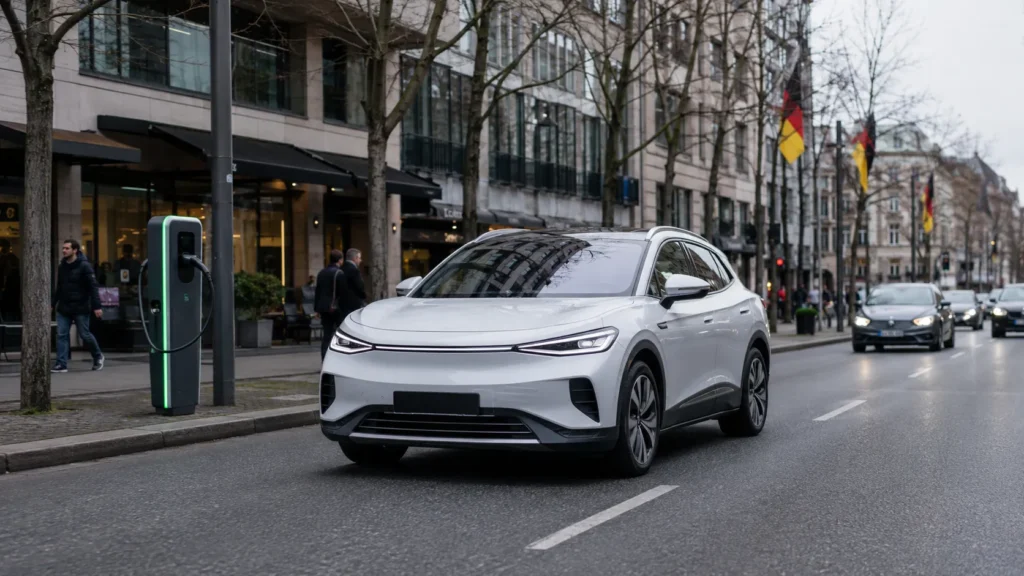
Europe is important, but Germany carries a different weight.
It is the home of Volkswagen, BMW and Mercedes-Benz. It is Europe’s largest national car market and one of the most brand-loyal automotive cultures in the world.
Winning customers in Germany is harder than generating attention at an international motor show.
BYD nevertheless recorded its strongest-ever German sales month in April 2026. Its year-to-date registrations were up by several hundred percent, continuing a rapid rise from a relatively small base.
The company is targeting at least 50,000 German vehicle sales during 2026. That would be more than double the roughly 23,000 vehicles it registered in the country during all of 2025.
BYD does not have to outsell Volkswagen to cause problems for Germany’s manufacturers.
It only needs to become a credible alternative.
Every buyer who walks into a BYD showroom is being asked to reconsider assumptions about where advanced cars come from. The competition is no longer simply between a cheaper Chinese vehicle and a more prestigious German one. It increasingly concerns batteries, cabin software, charging, equipment, financing, warranties and how much technology a customer receives for the price.
BYD’s vertical integration gives it more freedom to adjust that equation. Volkswagen, BMW and Mercedes cannot assume that European customers will indefinitely pay more for a familiar badge if another brand offers a persuasive overall package.
German manufacturers still possess major advantages in brand recognition, dealer support, fleet relationships and customer trust. Those strengths will not disappear in one sales year.
But BYD’s growth means they can no longer treat Chinese competition as a distant export problem.
It is now arriving on their home turf.
Volkswagen Is Also Losing Ground in China
The larger twist is that German automakers are being challenged from both directions.
While BYD moves into Germany, Volkswagen is losing influence in China—a market that was once one of the foundations of its global earnings.
Volkswagen’s share of the Chinese market fell from 14.7% in 2015 to 9.7% in 2025. Over roughly the same period, Chinese buyers shifted toward domestic brands that were faster to develop electric drivetrains, connected cabins and software-led features.
The financial effect is severe.
Volkswagen’s annual profit from its Chinese operations was once around $5 billion. For 2026, it has been projected at only about $228 million to $684 million.
VW is now considering large-scale restructuring and job reductions, with lost ground in China forming part of a wider crisis involving costs, factory utilisation, tariffs and weaker profitability.
That produces an uncomfortable picture for Europe’s largest automaker.
Volkswagen is being squeezed by Chinese brands in China, while some of those same companies are entering Europe with lower costs, newer platforms and increasingly mature products.
Germany’s car industry is not merely defending its home market. It is being forced to replace profits and scale that it previously enjoyed abroad.
BYD Is Powerful, Not Invincible
BYD’s international momentum can make the company look unstoppable. Its domestic results tell a more complicated story.
Sales inside China declined during the early months of 2026 as the market faced brutal price competition and reductions in consumer support.
BYD’s first-quarter net profit fell 55% from a year earlier, reaching its lowest level in more than three years. Revenue also declined as competitors such as Geely and Leapmotor intensified pressure in lower-priced segments.
That weakness helps explain the urgency behind BYD’s overseas expansion.
Selling abroad is not just a prestige project. International markets can offer better margins and reduce the company’s dependence on a Chinese market where discounting is making each additional sale less valuable.
Overseas expansion also creates new risks. BYD must build service networks, maintain resale values, navigate different safety and software rules and persuade customers to trust an unfamiliar brand with one of their largest purchases.
Vertical integration can reduce manufacturing costs. It cannot instantly create decades of customer loyalty.
What Happens If BYD Reaches 50,000?
BYD’s German target does not sound enormous beside the annual volumes of Volkswagen, BMW or Mercedes-Benz.
Its importance is strategic rather than absolute.
Reaching 50,000 sales would show that a Chinese automaker can move beyond early adopters and rental fleets to establish a meaningful position in Europe’s toughest major car market. It would strengthen BYD’s dealerships, put more vehicles on German roads and make the brand harder for mainstream buyers to ignore.
Missing the target would expose the limits of fast expansion in a market where service coverage and trust matter as much as battery technology.
Either result will be instructive.
BYD has already passed Ford in global volume, moved ahead of Tesla in battery-electric sales and helped Chinese automakers overtake Japanese brands in Europe for a month.
The remaining question is not whether China has built globally competitive car companies.
It is whether Germany’s automotive establishment can adapt before those companies become ordinary sights on German streets.