
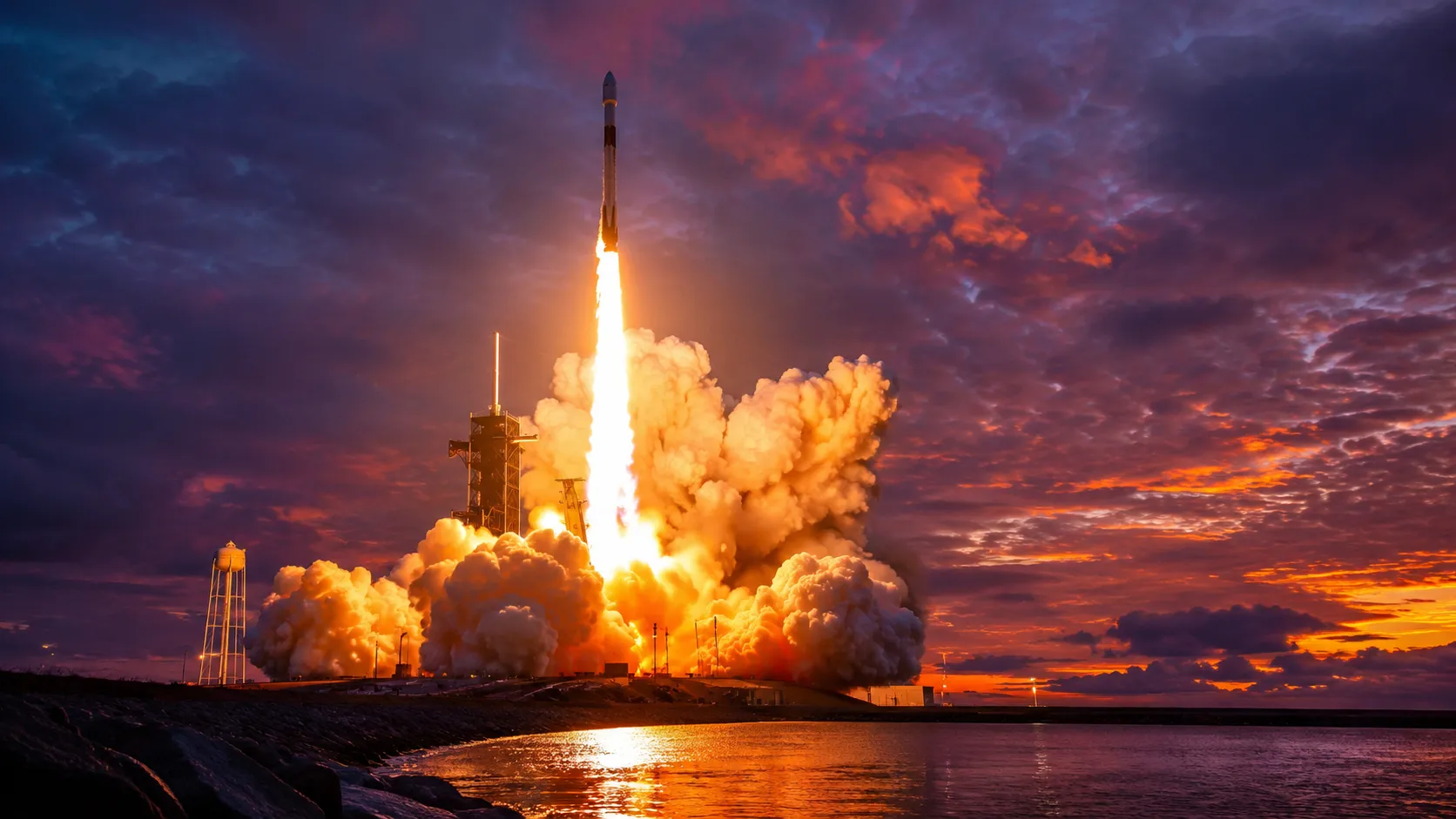
On May 22, 2026, SpaceX launched Starship Flight 12 — the debut of its brand-new Version 3 rocket, the most powerful launch vehicle ever built. Nine days later, the FAA officially grounded it. And in between? SpaceX quietly kicked off the roadshow for what could be the largest IPO in the history of the stock market.
You genuinely cannot write this stuff.
What Happened on Flight 12
Flight 12 was a big deal before it even launched. It marked the first flight of Starship Version 3 — a heavily upgraded configuration featuring the brand-new Raptor 3 engines, making their program debut. SpaceX had been building toward this for months, delayed three times across March, April, and May.
When it finally lifted off from Starbase, Texas on May 22, the results were… mixed. The Starship upper stage did its job — it reached its intended trajectory and completed most of its planned mission, eventually splashing down in the Indian Ocean as planned. So far, so good.
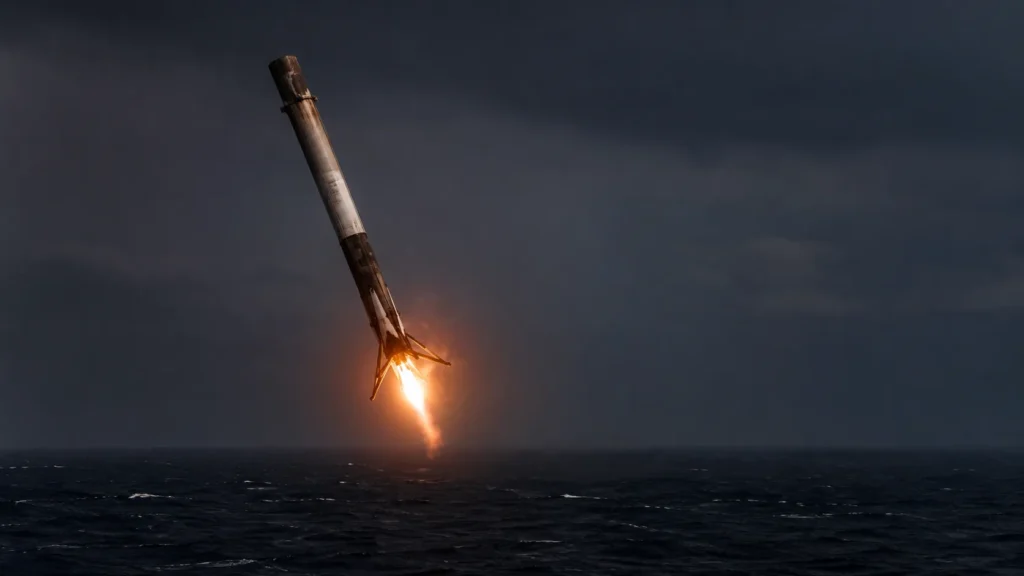
The problem was the Super Heavy booster. After separating from the upper stage, it attempted a boostback burn to reverse its trajectory and head back toward the Gulf of America for a controlled splashdown. It couldn’t light all its planned engines. The burn was partial and ended early. The booster then attempted a landing burn — and failed, hitting the water in what SpaceX diplomatically called a “hard splashdown.”
Nobody was hurt. No public property was damaged. But the FAA saw enough to act.
The FAA Steps In — Again
On May 27, five days after the launch, the FAA officially classified Flight 12 as a mishap — a formal designation that immediately grounds the vehicle until a full investigation is completed and corrective actions are approved.
This isn’t new territory for SpaceX. Flight 12’s investigation is actually the seventh time a Starship launch has triggered an FAA mishap probe. But this one carries extra weight because of the Raptor 3 engines — making their very first flight on this mission. With both the booster’s boostback burn and the upper stage’s vacuum engine count affected on the same flight, investigators will have a lot to dig through.
“A return to flight of the Starship-Super Heavy vehicle is based on the FAA determining that any system, process or procedure related to the mishap does not affect public safety.”— FAA Statement, May 27, 2026
Based on how long previous Starship investigations have taken — roughly two months on average — analysts at NASASpaceFlight are projecting a July–August 2026 window for Flight 13. SpaceX may also skip the booster catch attempt on the next flight and repeat the Gulf splashdown profile to reduce risk while the Raptor 3 issues are sorted out.
Why This Matters: The IPO Elephant in the Room
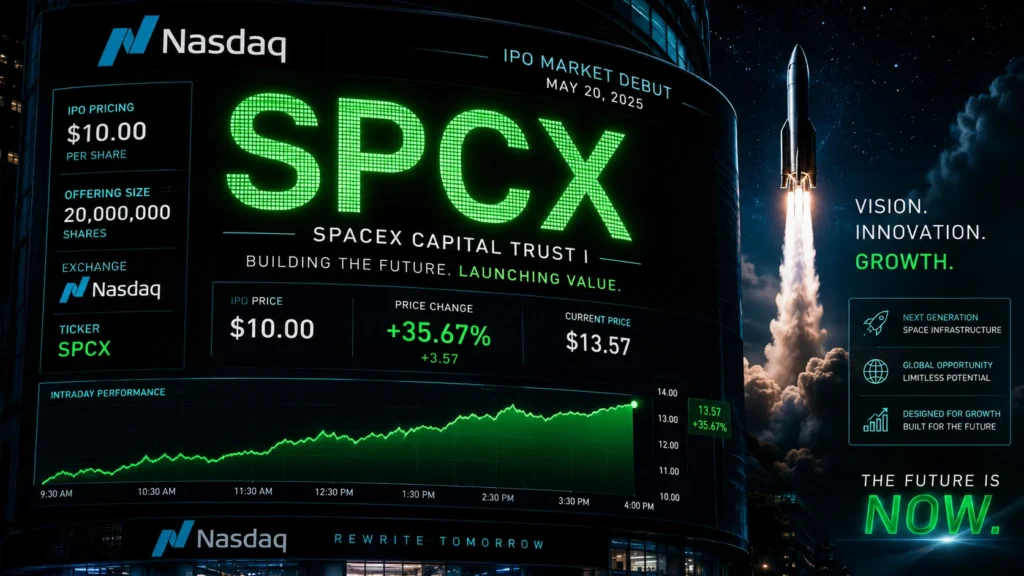
Here’s where it gets interesting. SpaceX isn’t just a rocket company anymore — it’s weeks away from going public on Nasdaq under the ticker SPCX, targeting a valuation of $1.75 trillion to $2 trillion and aiming to raise up to $75 billion. To put that in perspective: the previous record holder for the largest IPO in history was Saudi Aramco, which raised $29 billion in 2019.
The IPO roadshow is expected to kick off around June 4. Pricing is targeted for June 11. Trading could begin as early as June 12.
And sitting right in the middle of all of that: a grounded Starship, a FAA investigation, and a launch program that’s now facing its first major setback in the V3 era.
Why does this matter for investors? Because Starship is the backbone of SpaceX’s next growth chapter. The company has already stated it plans to begin deploying Starlink Version 3 satellites — which fly exclusively on Starship — in the second half of 2026. Every month Starship stays grounded is a month those next-gen satellites stay on the ground. And those satellites represent SpaceX’s biggest revenue growth opportunity ahead of the IPO.
Should You Be Worried About the IPO?
Probably not as much as the headlines suggest. Here’s why:
- SpaceX has been here before. Six previous mishap investigations haven’t stopped the company’s momentum. Each time, they’ve fixed the problem, flown again, and moved forward. The program has been defined by iterative failure and rapid improvement from the very beginning.
- The upper stage worked. Flight 12 wasn’t a catastrophic failure — the Starship spacecraft itself performed well. The issue is isolated to the Super Heavy booster and specific Raptor 3 engine behavior.
- Falcon 9 is still flying. SpaceX just completed its 50th Starlink mission of 2026 on May 30, with Falcon 9 running like clockwork. The company’s core launch business is completely unaffected.
- Elon Musk has reserved 30% of the IPO for retail investors — three times the typical allocation — which signals confidence in the offering’s ability to absorb demand even with near-term volatility.
That said, anyone buying into a SpaceX IPO needs to understand what they’re actually buying: a company whose most ambitious products are, by design, still in a testing phase. The S-1 filing literally says: “Developmental testing by definition is unpredictable.” Flight 12 is exactly that unpredictability in action.
The Bigger Picture: SpaceX Is Still in a League of Its Own
While Starship is grounded, it’s worth remembering what’s happening around it. Blue Origin’s New Glenn rocket exploded during prelaunch testing at Cape Canaveral on May 29 — one week after Flight 12. SpaceX’s closest competitor just had a significantly worse week, and nobody’s talking about grounding their IPO dreams.
SpaceX flew 50 Starlink missions in 2026 before the end of May. Its Falcon 9 reusability program continues to set records. And NASA is still counting on a version of Starship V3 to put humans on the Moon in early 2028 — something no other vehicle can do.
Flight 12 was a setback. The investigation will find what went wrong with the Raptor 3 engines, SpaceX will fix it, and Flight 13 will fly — probably by August. This is how the company has always worked. It’s not a bug. It’s actually the feature that’s made SpaceX the most successful rocket company in history.
The Bottom Line
SpaceX is simultaneously managing a grounded rocket, a federal investigation, and the imminent launch of what may be the biggest IPO in stock market history. It’s chaotic. It’s messy. And it’s completely on brand for a company that has built an empire by doing what everyone said was impossible, on its own schedule, through sheer iteration.
Whether you’re watching as a space fan or eyeing SPCX as an investment — this is the most interesting two weeks SpaceX has ever had. And it’s only just getting started.
Want more on the SpaceX story? Check out our earlier piece: SpaceX IPO — Why Elon Musk’s Rocket Company Could Become the Biggest Tech Listing Ever. And if you’re wondering what AI has to do with SpaceX’s valuation, read: AI Is Stealing Jobs — And Big Tech Couldn’t Care Less.



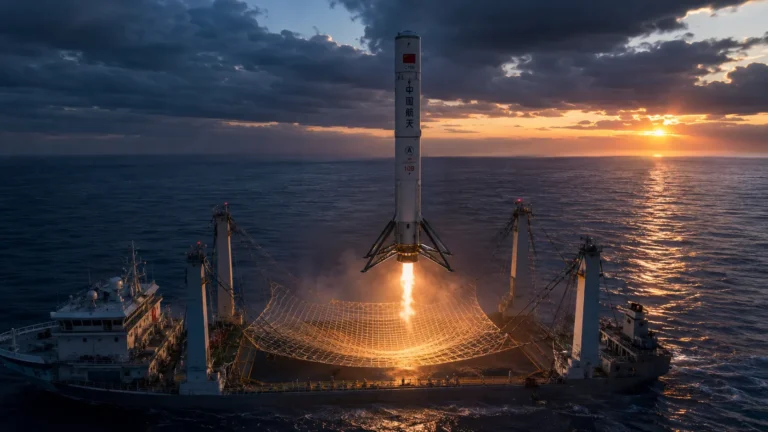
[…] so much hardware that the economic benefit disappears. ers when comparing the recovery with Starship Flight 12 and SpaceX’s iterative test program. A reusable rocket becomes commercially powerful only when recovery is repeatable, refurbishment is […]