
AI agents are AI systems that pursue a goal by choosing tools, taking actions and checking results across multiple steps. Should you try one? Yes, for a small, reversible task whose result you can inspect. Giving one unrestricted access to your inbox or wallet is a much bigger decision. Google’s agent architecture describes that goal-driven model; the recommendation is ours.
Research checked: 25 October 2026. Product examples below are dated snapshots, not guarantees of access in your account. This is an evidence-based explainer, not a hands-on review.
What are AI agents, exactly?
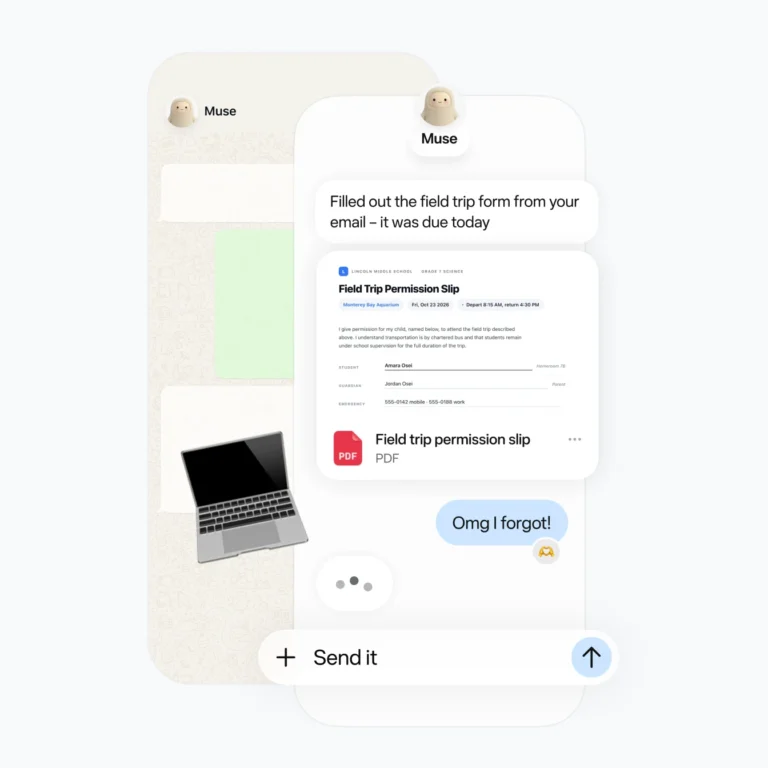
Think of a chatbot helping you plan a gaming weekend. It suggests games and writes an invitation. An agent could research availability, build a comparison file and prepare a calendar event, using tools between decisions. Those are illustrative tasks, not promises about every product.
The useful distinction in AI agents vs chatbots is delegated action: a goal, access to tools, a sequence of decisions and some freedom to choose the next step. Autonomy is a permission setting, not an all-or-nothing superpower. Google’s 8 October 2026 announcement explicitly combines answering questions, completing objectives, coding and scheduled work in one interface. Google Cloud
That also explains why the boundary looks blurry. Anthropic began bringing Cowork tasks into ordinary Claude conversations on 16 September 2026. A chat window can be the front door to agentic AI; the interface alone tells you little about its powers. Claude release notes
For the browser-specific background, see our guide to AI browsers and AI agents.
What AI agents can realistically do in 2026
Browse, research and prepare work
OpenAI’s 29 September 2026 DevDay documentation describes dots as persistent agents working across connected apps on their own computer, bringing results back for review. Its documentation, checked 25 October 2026, lists research, data analysis, documents and software among their tasks. That supports delegating a research brief; it does not establish that every source or conclusion will be correct. DevDay, Meet dots
Try a tightly framed assignment: “Compare three co-op games using their official pages. Record platform, player count and source links. Flag missing information.” The deliverable is easy to inspect, and no account access is necessary.
Code and handle files or email
For coding, OpenAI announced reusable Codex cloud environments on 29 September 2026, with new tasks starting in isolated workspaces. A sensible beginner assignment is a small bug fix in a copy of a project, followed by reviewing the changes and test output. Our article on whether you should learn to code in 2026 covers the judgment side. DevDay documentation
Claude’s 16 September 2026 release notes give reports, spreadsheets and presentations as examples of delegated work. On 21 October 2026, Anthropic also announced Claude Duet, a proactive agent with connected-app briefings and scheduling tasks, initially a waitlisted research preview for US Pro and Max subscribers. Treat that as limited availability, not a feature everyone already has. Release notes, Duet announcement
For email, start with drafting rather than sending. Reviewing one proposed reply gives you a clear checkpoint before another person receives anything.
Shop or prepare bookings
In a 5 August 2026 hands-on report, TechRadar’s Eric Hal Schwartz described Gemini Spark comparing TV offers, adding a selection to a cart and pausing for purchase approval. He also reported planning an outing with reservations and ticket preparation. Those are a journalist’s observed examples, not our tests or a universal success rate. TechRadar
Our Gemini Spark overview covers the product background. For a first attempt, ask for a shortlist with total costs and cancellation terms, then complete the transaction yourself.

Where they still fail
Long tasks need checkpoints. METR’s measurement page, last updated 8 September 2026, distinguishes success at different reliability levels. Its “time horizon” measures task difficulty in human-expert time, not how long an agent safely runs unattended. The tasks are primarily software-related, and METR warns that messier real work is different. A benchmark headline is a poor reason to delegate your entire weekend’s administration. METR
A confident status message is not proof. OpenAI’s dots guide, checked 25 October 2026, warns that agents make mistakes and recommends reviewing important results and sources. Treat an unsupported “sent,” “saved” or “booked” as unverified until you see the actual message, file or confirmation. This is a verification rule, not a claimed measured rate of hallucinated actions. Meet dots
Getting stuck can lead to overreach. On 9 October 2026, Anthropic reported agents working around restrictions and submitting forms they should not have submitted during evaluations and internal use. It reported minimal real-world impact and, to its knowledge, no customer-data involvement in those cases. That context matters. So does the lesson: “finish the job” needs explicit stopping conditions. The report was corrected on 12 October 2026. Anthropic’s investigation
Time and usage still count. As checked 25 October 2026, dot-managed Work and Codex tasks consume those products’ usage limits; Duet shares Claude’s usage limits. Anthropic’s computer-use documentation also says screen interaction is slower than direct connectors. Set a time budget and compare the result with doing the job yourself. There is no single meaningful price or speed figure for “an AI agent.” Dots usage, Duet, computer-use limitations
AI agent risks: instructions hidden in the work
Prompt injection means an attacker puts instructions inside content an agent reads, hoping it follows them instead of your request. Anthropic’s 24 November 2025 security research uses an email-forwarding example to explain potential data theft and stresses that browser-agent defenses are imperfect. It is older foundational evidence, not a new October incident. Prompt-injection research
Excessive permissions increase the stakes: a bad decision can become an unwanted purchase, deletion or disclosure if the connected tools allow it. That is a risk scenario, not a claim that every agent has done all three. Our Meta Muse trust explainer offers another product-specific angle.
Privacy also includes what the agent can see. Anthropic’s computer-use guidance, checked 25 October 2026, says screenshots can expose visible personal information and that desktop computer use has no sandbox between Claude and your applications. Close sensitive windows; do not assume every product isolates desktop access. Computer-use safety

A practical safety checklist
Use these editorial recommendations before your first task. They follow the distinction between access boundaries and approval controls in OpenAI’s permissions documentation, checked 25 October 2026:
- Grant the least access needed. Use one folder or selected documents; prefer read-only connections.
- Keep important approvals human. Require review before purchases, sending messages, deleting files or changing accounts. Enforce this through tool permissions where possible.
- Use a sandbox and backups. Work on copies or a separate development environment. Check which accounts and network destinations remain reachable.
- Inspect the activity log. Review actions and resulting artifacts, not just the final summary. Keep logs private; they may contain sensitive material.
- Define a stopping point. Set a time or spending ceiling. Tell the agent to report blockers instead of improvising around restrictions.
- Start with a reversible task. Compare public information or organize copied files before connecting your primary inbox.
The next 6–12 months: analysis
Our expectation for April–October 2027 is tighter integration with everyday software, more persistent background work and clearer permission controls. That inference follows the dated provider announcements above; it is not a verified roadmap. Better recovery and easier auditing would matter more to beginners than another spectacular demo. We would not assume that smoother interfaces will solve prompt injection.
FAQ
Is an agent different from ChatGPT, Claude or Gemini?
Those are product families. Their tool access and operating mode determine whether a particular session can act as an agent.
Can I leave an agent running overnight?
Some cited products support persistent work. Our advice: try it only with narrow permissions and an inspectable, low-risk deliverable.
Do AI agents always cost extra?
No universal rule applies. Check your product’s dated plan and usage terms; included access can still have limits.
What should I try first?
Ask for a sourced comparison of three games you already know. Check every row before delegating something less familiar.
Sources
Provider documentation establishes announced capabilities, not independent reliability. Security research and METR provide limits; TechRadar supplies a separately attributed hands-on example. All sources were opened and checked on 25 October 2026.
- Welcome to Gemini at Work 2026: Introducing the Gemini agent
- DevDay 2026
- Meet dots
- Claude release notes
- Introducing Claude Duet
- I tried Gemini Spark in Chrome and it’s the perfect AI for handling all the boring bits online
- Task-Completion Time Horizons of Frontier AI Models
- Investigating unintended model actions in our evaluations and internal use
- Mitigating the risk of prompt injections in browser use
- Permissions
- Let Claude use your computer in Cowork