Before AI could generate a fake movie scene from one sentence, before TikTok filters could turn your living room into a spaceship, and before everyone suddenly became a “prompt engineer,” there was one guy making the internet scream:
“Wait… how did he do that?”
That guy was Zach King.
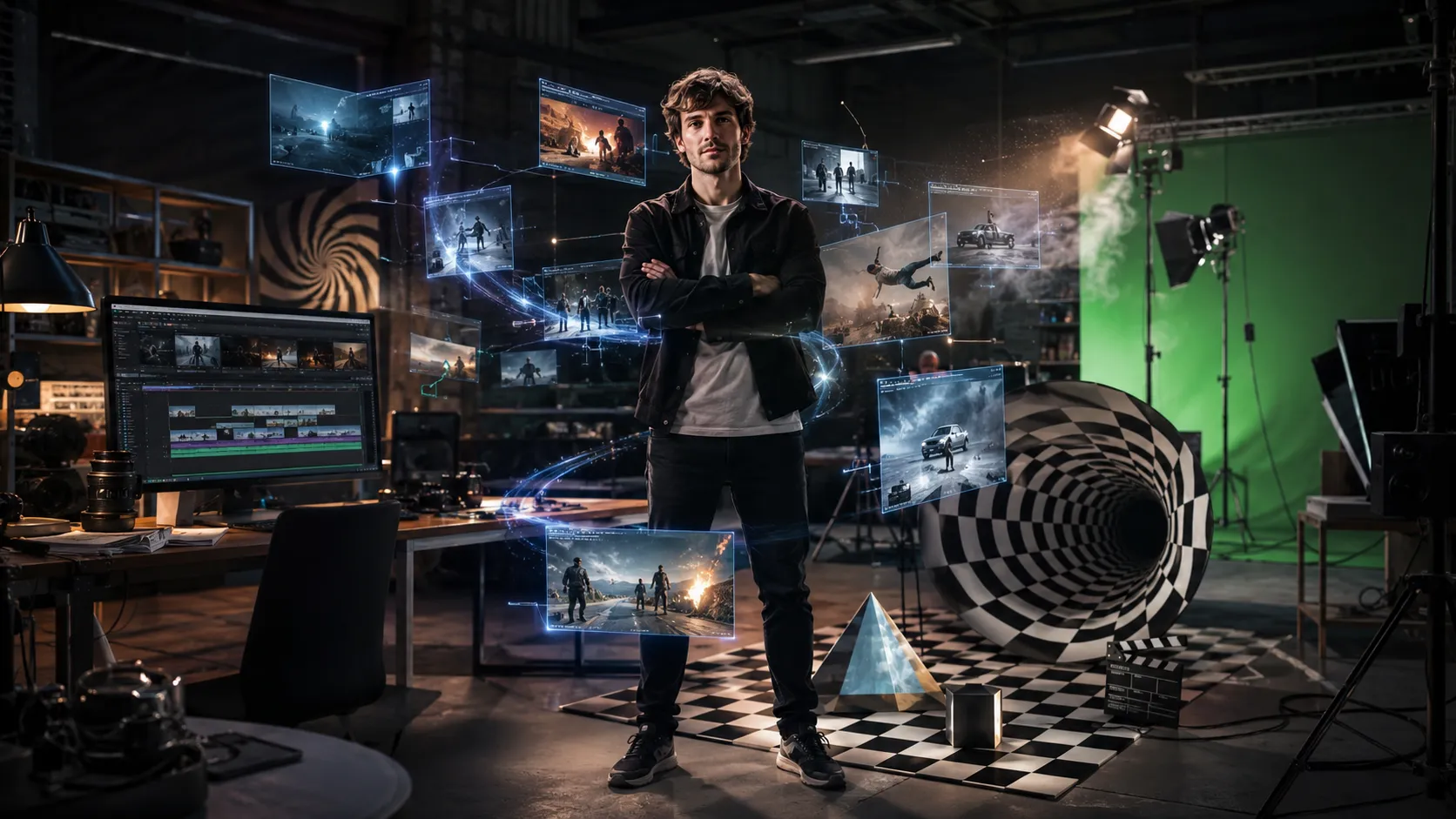
He did not need a giant AI model, a cloud server, or a button that says “Generate Magic.” He used cameras, timing, editing, props, patience, and probably more coffee than any human should legally consume.
And somehow, his videos felt more magical than many AI-generated clips today.
Because before AI made visual tricks easy, Zach King made them feel impossible.
The Internet Had Magic Before AI
Today, we live in a world where AI can generate videos, images, voices, music, and even fake influencers. You can type a prompt like:
“Make a cat driving a Ferrari on Mars in cinematic style.”
And a few seconds later, there it is.
Amazing? Yes.
A little scary? Also yes.
But years before AI tools became mainstream, Zach King was already creating short videos that looked like reality had a software bug.
He would jump through walls.
He would pull objects from screens.
He would turn drawings into real items.
He would make impossible transitions look completely natural.
And the best part?
It all looked fun.
Not cold. Not robotic. Not “generated.” Just pure creative internet magic.
Who Is Zach King?
Zach King is a filmmaker, internet creator, and digital illusionist best known for his short “magic” videos. His style became famous because he combined classic filmmaking techniques with clever editing.
He became especially popular during the Vine era, where creators had only six seconds to catch attention.
Six seconds.
That is shorter than the time it takes most people to decide what snack they want.
But Zach King used those six seconds like a magician uses a stage. Every clip had a setup, a surprise, and a payoff. It was storytelling in its smallest possible form.
And that is one reason his content worked so well.
He understood something many creators still forget:
A great video does not need to be long. It needs to be memorable.
Why His Videos Felt Like Real Magic
Zach King’s videos worked because they were not just random effects. They were little stories.
There was usually a problem, a trick, and a funny ending.
For example:
- He wants to enter a picture.
- He touches the frame.
- Suddenly, he is inside the picture.
- Your brain quietly packs its bags and leaves the room.
That is the beauty of his style.
The trick is technical, but the feeling is simple. You do not need to understand video editing to enjoy it.
You just react.
You laugh.
You replay it.
You send it to someone.
Then you watch it again at 2 a.m. instead of sleeping like a responsible adult.
Before AI, Creativity Needed More Sweat
Let’s be honest: AI has made a lot of creative work faster.
Need a blog image? Generate it.
Need a voice-over? Generate it.
Need a short video idea? Generate it.
Need a fake photo of a raccoon CEO giving a quarterly report? Somehow, also generate it.
But before these tools became common, creators had to build the illusion manually.
That meant:
- Planning every movement
- Shooting scenes multiple times
- Matching camera angles
- Hiding cuts
- Using props
- Masking layers
- Editing frame by frame
- Making sure the joke still worked
This is why Zach King’s work is so impressive.
It was not only about the final effect. It was about the invisible work behind it.
The magic was not just in the video. The magic was in the patience.
Zach King Was Basically Human Generative AI
Here is the funny part.
Many things people now use AI for were already happening in Zach King’s videos, just with human planning instead of machine generation.
AI can now create impossible scenes.
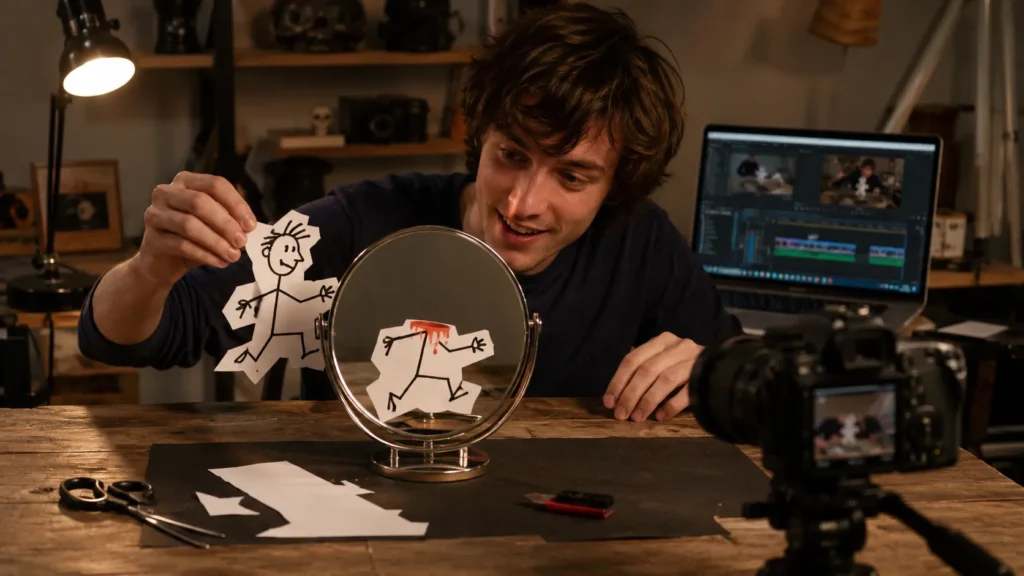
Zach King created impossible scenes too — but he had to actually shoot them.
AI can create visual surprises.
Zach King created visual surprises too — but he had to plan every frame.
AI can create surreal videos.
Zach King created surreal videos too — but he made them feel handmade, playful, and personal.
In a way, Zach King was like a human version of a generative video tool.
Except instead of typing prompts, he used imagination, cameras, editing software, and probably a lot of “Okay, one more take.”
Why His Content Worked So Well Online
There are many reasons Zach King became so popular, but the biggest one is simple:
His videos are instantly understandable.
You do not need to speak English.
You do not need to understand technology.
You do not need to know anything about video editing.
You just see something impossible happen.
That makes his content perfect for global platforms like TikTok, Instagram, YouTube Shorts, and the old Vine format.
His videos also had three powerful ingredients:
1. Instant Curiosity
The first second matters.
Zach King’s clips often start with something normal, then quickly become strange. That creates instant curiosity.
You think:
“Wait, what is happening?”
And once your brain asks that question, you are already watching.
2. A Clear Payoff
Many viral videos fail because they build curiosity but never deliver a satisfying ending.
Zach King usually delivers the payoff fast.
There is always a moment where the trick lands.
That is when viewers smile, laugh, or hit replay.
3. Replay Value
This is the secret sauce.
His videos are not just watchable. They are rewatchable.
People watch once for the surprise.
Then they watch again to figure out the trick.
Then they watch a third time because they still have no idea.
That is platform gold.
More replays mean more watch time, more engagement, and more reach.
The Big Difference Between AI Magic and Zach King Magic
AI-generated content can be beautiful, impressive, and fast.
But sometimes it feels too easy.
You look at it and think:
“Cool… but a machine made it.”
With Zach King, the reaction is different.
You think:
“How did a human plan this?”
That human element matters.
There is a kind of joy in knowing that somebody actually built the trick. Somebody had the idea, placed the camera, moved the object, edited the frame, tested the timing, and probably failed 20 times before the final version worked.
That is why his videos still feel special today.
AI can generate wonder, but human creativity gives wonder a heartbeat.
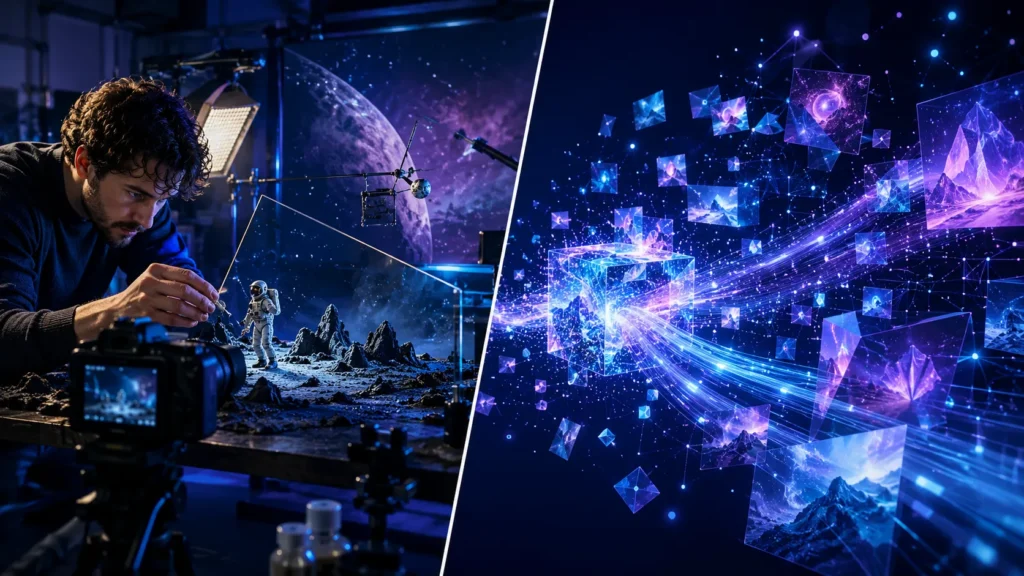
What AI Creators Can Learn From Zach King
AI tools are powerful, but tools alone do not make great content.
A boring idea generated with AI is still boring.
A weak story with beautiful visuals is still weak.
A video with no surprise is still easy to skip.
Zach King’s work teaches modern AI creators some very important lessons.
Lesson 1: Start With the Idea, Not the Tool
Many people open an AI tool and ask:
“What can I make?”
But better creators ask:
“What do I want people to feel?”
That is a big difference.
Zach King’s videos usually start with a simple emotional goal:
- Make people laugh
- Make people curious
- Make people surprised
- Make people feel like kids again
The tool comes after the idea.
Lesson 2: Keep It Simple
The best illusions are often easy to understand.
A person walks into a picture.
A toy becomes real.
A room changes instantly.
A normal object behaves strangely.
Simple concepts travel faster online because people understand them immediately.
That is also true for AI content.
Do not make your idea too complicated just because the tool can do complicated things.
Lesson 3: Timing Is Everything
Comedy and magic both depend on timing.
Reveal the trick too early, and it feels flat.
Reveal it too late, and people scroll away.
Reveal it perfectly, and people replay the video.
This is why Zach King’s short-form storytelling is still a masterclass for modern creators.
Lesson 4: Make People Ask “How?”
The strongest viral videos create a question in the viewer’s mind.
How did he do that?
Is that real?
Was that edited?
Can I watch that again?
AI creators should aim for the same feeling.
The best content does not just show something.
It makes the viewer participate mentally.
Why This Matters in the AI Era
We are entering a strange creative age.
Soon, anyone will be able to generate videos that once required a full production team. That is exciting. It opens doors for small creators, businesses, teachers, bloggers, and solo developers.
But it also creates a problem.
When everyone can generate impressive visuals, impressive visuals become less impressive.
That means the real advantage will not be the tool.
The advantage will be:
- Taste
- Humor
- Storytelling
- Timing
- Originality
- Personality
- Human emotion
Basically, all the things Zach King already mastered.
AI may change how content is made, but it does not change why people watch.
People watch because something makes them feel.
The Nostalgia Factor: Why We Still Love Old Internet Magic
There is also something nostalgic about Zach King’s videos.
They remind us of an earlier internet.
An internet where short videos felt less optimized and more playful. Where creators experimented. Where a six-second clip could feel like a tiny movie.
Before every platform looked the same.
Before every trend had a template.
Before every creator talked about algorithms, retention graphs, and monetization strategies.
Zach King’s content felt like someone saying:
“Look what I made!”
Not:
“Here is my growth strategy for Q4.”
And honestly, we need more of that energy.
Zach King and the Creator Economy
Zach King also showed what the modern creator economy could become.
He was not just posting random videos. He built a recognizable creative identity.
That is huge.
When you see one of his videos, you instantly know the style:
- Clean visuals
- Magical twist
- Family-friendly humor
- Clever editing
- Fast payoff
- High replay value
That is branding.
Not the boring corporate kind with 87-page PDF guidelines and someone arguing about the exact shade of blue.
Real branding.
The kind where people recognize your work before they even see your name.
For creators, bloggers, YouTubers, and businesses, this is a big lesson:
Your style is your signature.
AI can help you create faster, but your signature is what makes people remember you.
Could Zach King’s Style Work Even Better With AI?
Absolutely.
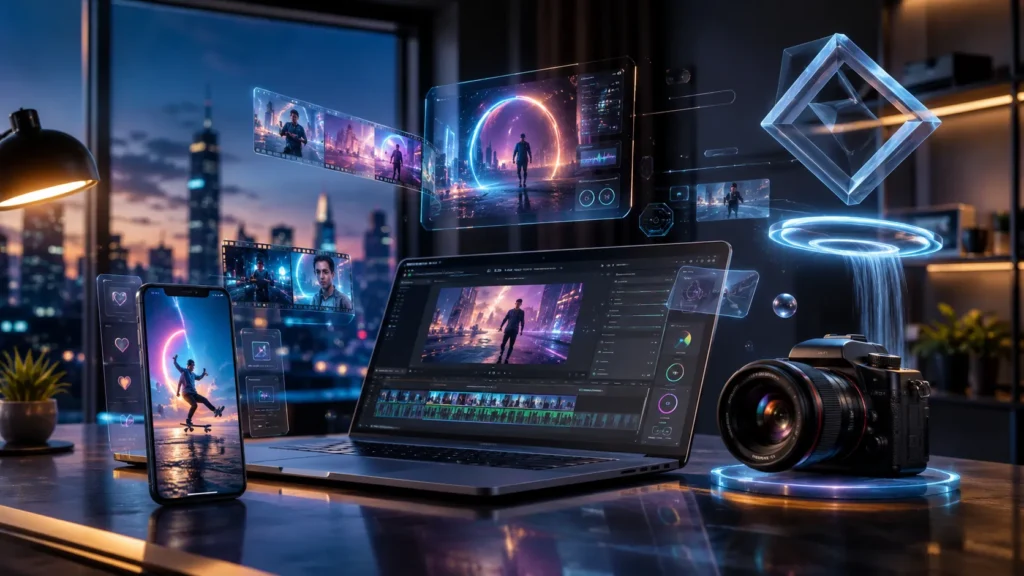
AI does not replace creators like Zach King. It gives creators more tools.
Imagine combining his style with modern AI tools:
- AI-generated concept art for planning tricks
- AI storyboards for video ideas
- AI background replacement
- AI rotoscoping support
- AI sound design
- AI-assisted editing
- AI-generated props or environments
That could make the creative process faster.
But the core idea would still need a human.
Because AI can suggest a thousand ideas, but a creator still has to choose the one that feels magical.
That is the important part.
AI can increase output. But taste decides quality.
The Funny Truth: We Are All Magicians Now
Here is the funny thing.
Thanks to AI, everyone now has access to tools that feel like magic.
You can remove backgrounds.
You can generate images.
You can clone voices.
You can animate pictures.
You can create videos from text.
You can make music without touching an instrument.
That is wild.
But it also means the internet is about to become very, very crowded with “magic.”
So the question is no longer:
“Can you make something impressive?”
The question is:
“Can you make something people actually care about?”
Zach King proved that people care when the idea is clever, the timing is sharp, and the execution feels joyful.
That lesson is more relevant now than ever.
Before AI We Had Zach King — And That Still Matters
Before AI tools made impossible visuals available to everyone, Zach King showed us that the internet could still feel magical.
He turned short videos into tiny illusions.
He made editing feel like wizardry.
He made people laugh without needing complicated explanations.
He created global content without relying on language.
And he reminded millions of viewers that creativity is supposed to be fun.
Today, AI can do incredible things.
But Zach King’s success reminds us of something important:
The tool is not the magic. The idea is the magic.
AI can generate a picture.
AI can generate a video.
AI can generate a voice.
AI can even generate a full scene.
But the spark — the playful “what if?” — still comes from human imagination.
And maybe that is the best way to think about the future of creativity.
Not humans versus AI.
Not old editing versus new tools.
But human imagination using better tools to create even bigger moments of wonder.
Because before AI, we had Zach King.
And honestly?
The internet was already pretty magical.
Final Takeaway
Zach King’s videos are more than funny internet tricks. They are a reminder that great content comes from curiosity, timing, storytelling, and a little bit of chaos.
AI may make creation faster, but it does not automatically make content better.
The creators who win in the AI era will be the ones who understand what Zach King understood years ago:
Make people stop. Make them smile. Make them wonder.
That is the real magic.