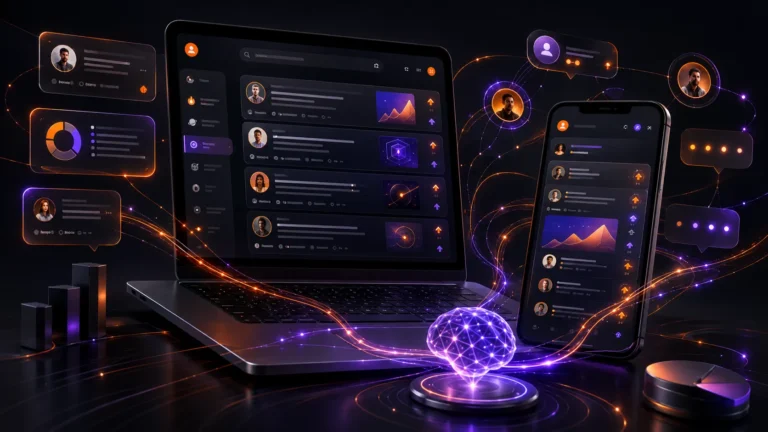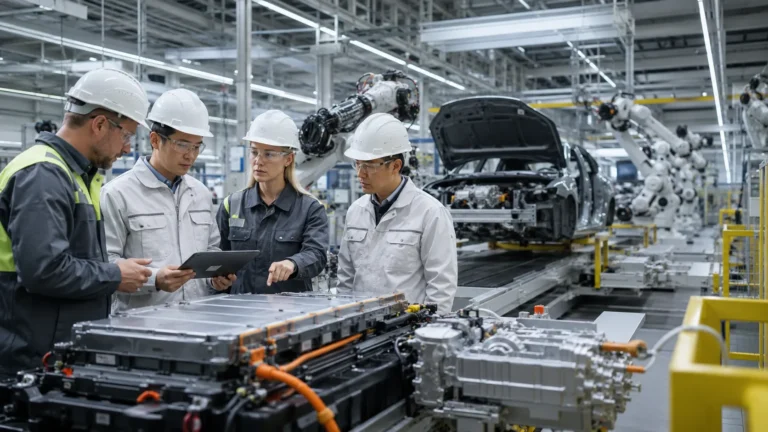
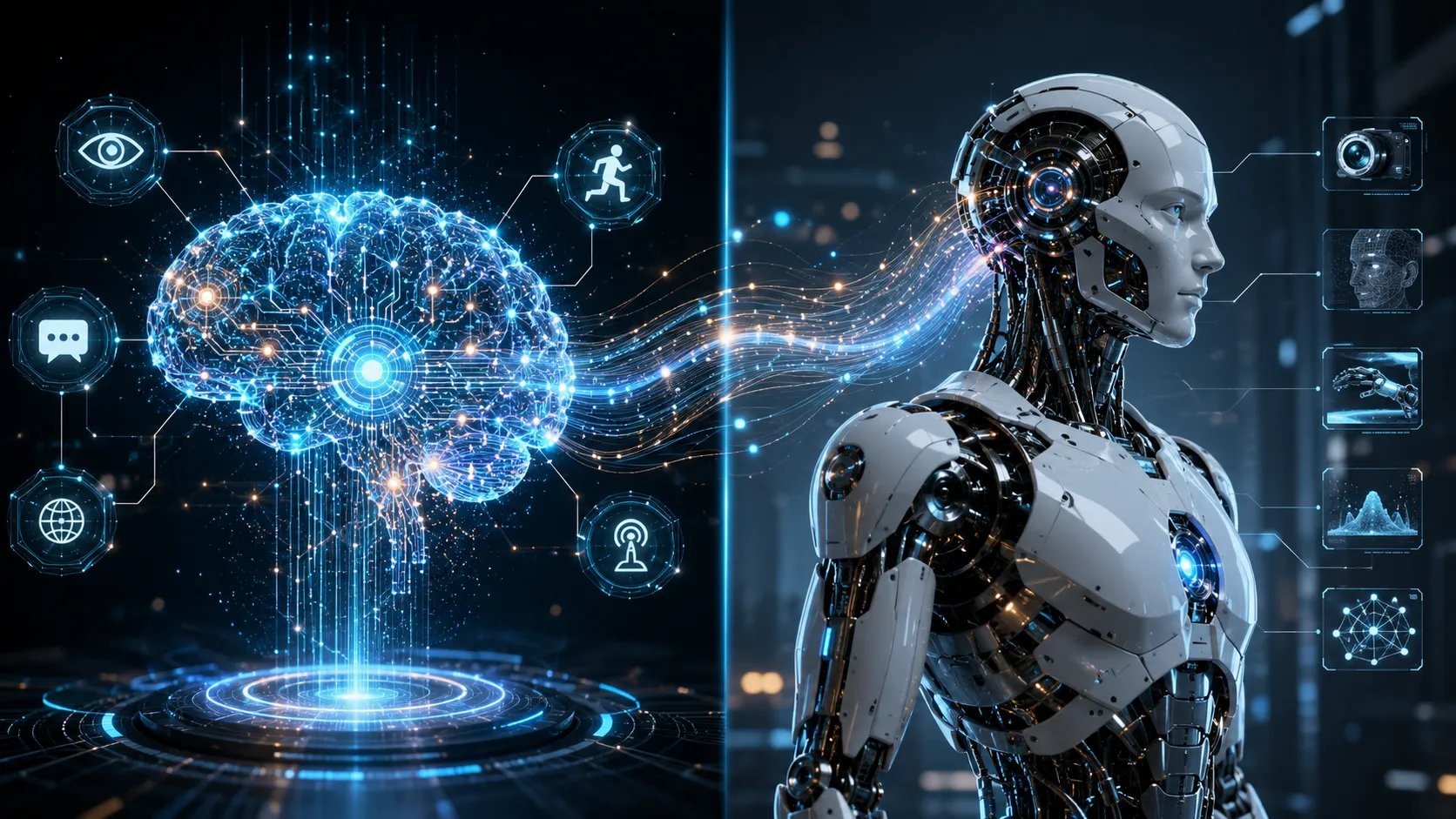
AI is no longer just something that writes emails, creates images, summarizes documents, or answers questions in a chat window.
The next big step is much more physical.
We are entering the age of Physical AI — artificial intelligence that can understand the real world, move through it, and take action through machines. And the most exciting symbol of this shift is the rise of humanoid robots.
These are not just science-fiction machines anymore. Companies are testing humanoid robots in factories, warehouses, logistics centers, research labs, and even early home environments.
The big question is no longer: “Can AI think?”
The new question is: Can AI actually do things in the real world?
What Is Physical AI?
Physical AI means artificial intelligence that is connected to the physical world.
Instead of only working with text, images, code, or data on a screen, Physical AI works with:
- Cameras
- Sensors
- Robot arms
- Wheels or legs
- Hands and grippers
- Real-world environments
- Movement and action
A normal chatbot can tell you how to fold laundry.
A Physical AI robot should eventually be able to see the laundry, pick it up, fold it, and place it in the right drawer.
That sounds simple for humans. For robots, it is extremely difficult.
The real world is messy. Objects move. Lighting changes. People walk around. A cup may be half full. A box may be heavier than expected. A floor may be slippery.
That is why Physical AI is such a big deal. It tries to give robots the ability to perceive, understand, plan, and act in environments that were not perfectly designed for machines.
Why Everyone Is Suddenly Talking About Physical AI
For years, robotics felt slower than software AI.
ChatGPT, image generators, and AI coding tools exploded quickly because they live in the digital world. Digital AI can be trained, tested, and improved at massive speed.
Robots are different.
They need hardware. They need motors. They need batteries. They need safety systems. They need to survive real-world mistakes.
But now, several trends are coming together at the same time:
- AI models are getting better at vision and reasoning
- Simulation tools can train robots in virtual worlds
- Robot hardware is becoming cheaper and more capable
- Factories and warehouses need more automation
- Companies are investing heavily in humanoid robotics
This is why many people in tech believe Physical AI could become one of the next major AI waves.
Not because it will replace every worker tomorrow.
But because it could finally make robots more flexible, more useful, and more adaptable.
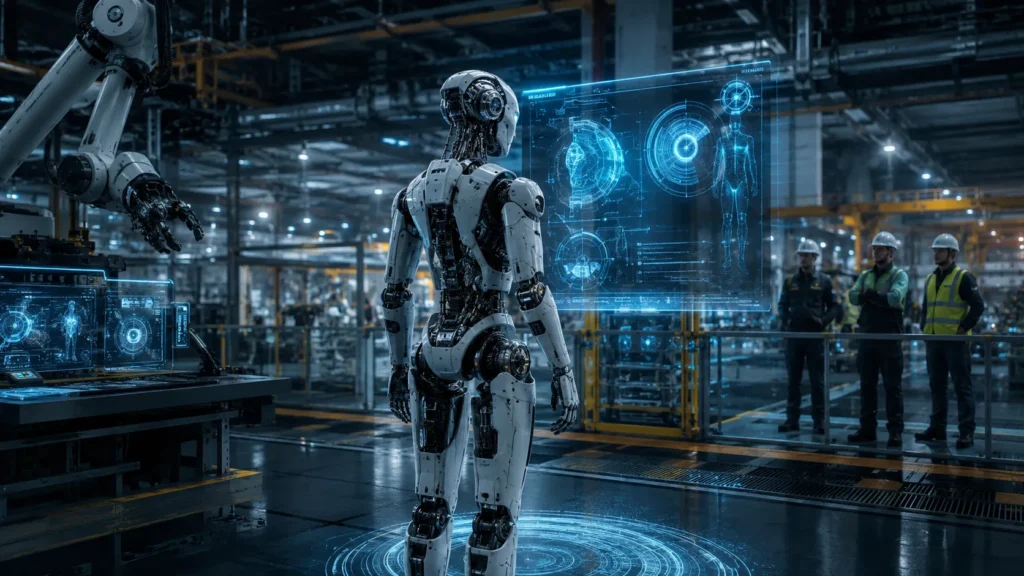
What Makes Humanoid Robots So Interesting?
Humanoid robots are robots shaped roughly like humans.
They usually have:
- A head or sensor area
- Two arms
- Two hands or grippers
- A torso
- Two legs
- Cameras and sensors
- AI software for movement and decision-making
At first, this design may seem strange. Why should a robot look like a person?
The answer is simple: the world was built for humans.
Doors, stairs, shelves, tools, kitchens, factories, cars, and warehouses are designed around human bodies. A humanoid robot can potentially work in these spaces without requiring the entire building to be redesigned.
That is the big promise.
A humanoid robot could one day use the same tools, walk through the same doors, and operate in the same environments as humans.
But there is a catch.
Humanoid robots are also extremely hard to build. Walking on two legs, balancing, using hands, reacting safely around people, and understanding unpredictable spaces are all major engineering challenges.
Physical AI vs Traditional Robotics
Traditional robots are already everywhere.
They weld cars, sort packages, move pallets, vacuum floors, inspect pipes, and assemble electronics.
But most traditional robots are designed for specific tasks.
A factory robot arm may be excellent at welding one part of a car. But ask it to clean a table, open a door, or carry a box through a messy room, and it cannot simply figure it out.
Physical AI aims to make robots more general.
Here is the difference:
Traditional Robotics
- Works best in controlled environments
- Often needs precise programming
- Usually performs one narrow task
- Requires structured workflows
- Can be very reliable but not very flexible
Physical AI Robotics
- Uses AI to understand the environment
- Can learn from demonstrations and simulations
- Can adapt to different objects and situations
- Can combine vision, language, and action
- Aims to make robots more flexible and useful
The goal is not just automation.
The goal is adaptable automation.
Vision-Language-Action: The Brain Behind Physical AI
One of the most important ideas in Physical AI is the rise of vision-language-action models.
That sounds technical, but the concept is easy to understand.
A robot needs to connect three things:
- Vision — What do I see?
- Language — What am I being asked to do?
- Action — How do I move my body to complete the task?
For example, a person might say:
“Pick up the blue box and place it on the lower shelf.”
A useful humanoid robot must understand the sentence, identify the blue box, understand the shelf, plan a safe movement, grab the box, carry it, and place it correctly.
That requires much more than a chatbot.
It requires AI that can turn instructions into physical movement.
This is why Physical AI is so exciting. It connects digital intelligence with real-world action.
Where Humanoid Robots Will Arrive First
The first useful humanoid robots probably will not start in normal homes.
They will most likely appear first in places where the environment is more predictable and the business case is stronger.
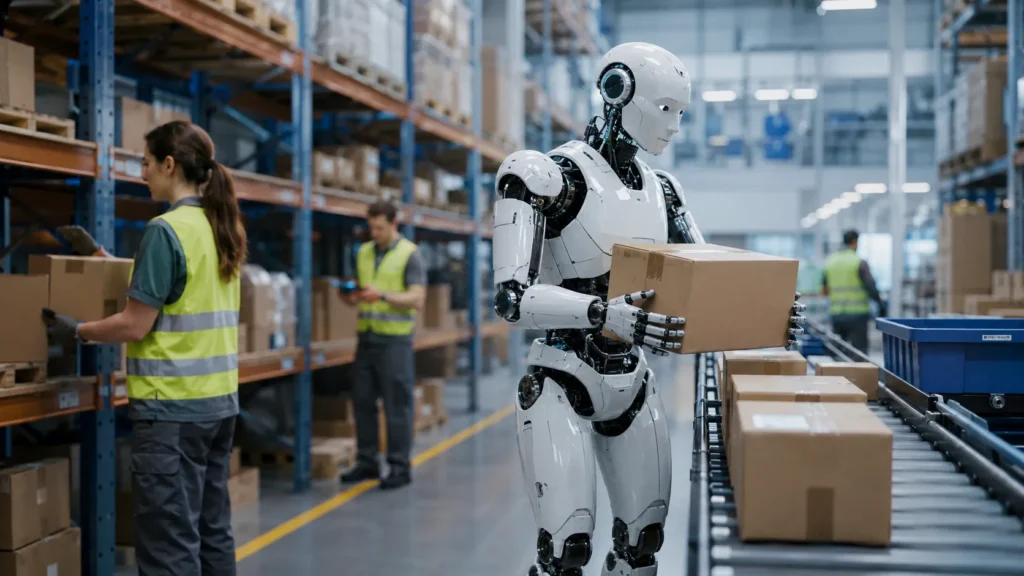
1. Warehouses
Warehouses are one of the clearest early markets.
Robots can help with:
- Moving boxes
- Sorting packages
- Carrying totes
- Loading and unloading
- Repetitive walking tasks
- Working during labor shortages
A warehouse is still complex, but it is more structured than a normal family home.
That makes it a better starting point.
2. Factories
Factories are another major area for Physical AI.
Humanoid robots could help with:
- Moving parts
- Inspecting components
- Supporting assembly lines
- Handling repetitive tasks
- Working in areas designed for humans
- Reducing physically demanding labor
Car manufacturers and industrial companies are already exploring how humanoid robots could support production.
The key word here is support.
In the near future, humanoid robots will likely assist human workers rather than completely replace them.
3. Logistics and Retail
Logistics centers, supermarkets, and retail backrooms could also benefit from more flexible robots.
A humanoid robot could eventually help with:
- Restocking shelves
- Moving inventory
- Checking product placement
- Supporting night shifts
- Handling repetitive carrying tasks
These jobs involve movement, object handling, and navigation — exactly the kind of work Physical AI is trying to improve.
Will Humanoid Robots Come Into Our Homes?
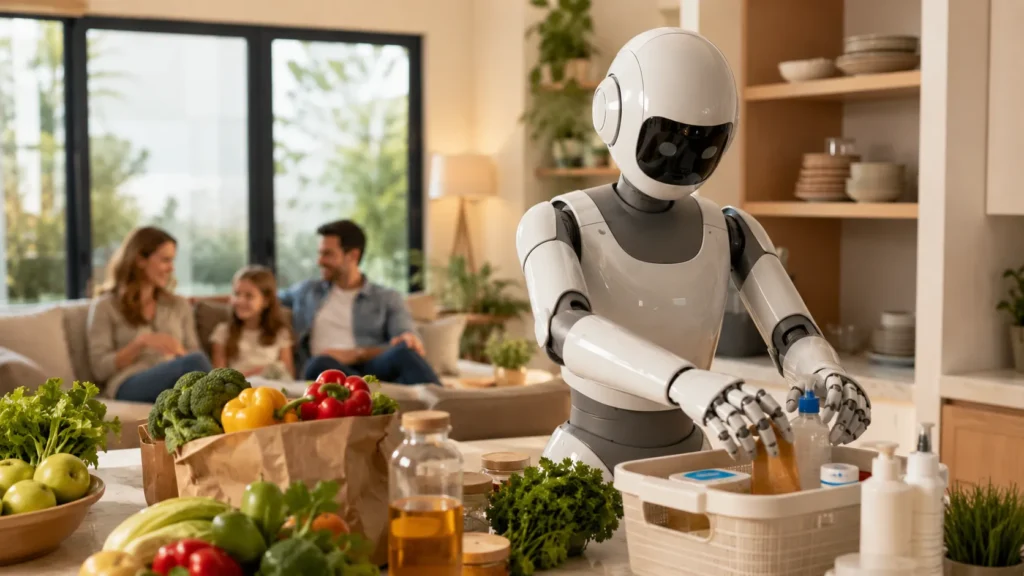
This is the dream that gets people excited.
Imagine a robot that can clean the kitchen, fold laundry, bring groceries inside, help elderly family members, or support people with limited mobility.
That future is possible.
But it is probably not the first step.
Homes are incredibly difficult environments for robots. Every home is different. Toys are on the floor. Pets move unpredictably. Children run around. Objects are placed in strange locations.
For a home robot to be truly useful, it must be:
- Safe around kids and pets
- Affordable for normal families
- Quiet enough for daily life
- Reliable every day
- Able to handle thousands of household objects
- Smart enough to recover from mistakes
- Secure and private
That is a very high bar.
So yes, home humanoid robots are exciting. But the first truly useful versions will likely be expensive, limited, and carefully controlled.
The home robot revolution may come — but factories and warehouses will probably get there first.
The Big Companies Racing Toward Physical AI
Several major companies and startups are pushing hard into humanoid robotics and Physical AI.
NVIDIA
NVIDIA is one of the most important companies in this space because it provides AI chips, simulation platforms, robotics software, and foundation models for robots.
Its Physical AI strategy focuses heavily on training robots in simulation before deploying them in the real world.
That matters because real-world robot training is slow and expensive. Virtual training can help robots experience many more scenarios before they touch the physical world.
Tesla
Tesla’s Optimus project is one of the most famous humanoid robot efforts.
Tesla already has experience with batteries, motors, cameras, AI, manufacturing, and real-world automation through its electric vehicles.
The company’s big idea is that a humanoid robot could eventually perform repetitive, boring, or dangerous tasks.
Tesla’s advantage is manufacturing scale.
Its challenge is proving that Optimus can become useful, safe, reliable, and affordable outside controlled demonstrations.
Figure AI
Figure is building general-purpose humanoid robots designed for both work environments and, eventually, homes.
The company has gained attention because of its focus on combining humanoid hardware with AI systems that can understand natural instructions and perform useful tasks.
Figure represents one of the most direct attempts to build a robot that feels less like a factory machine and more like a general-purpose assistant.
Agility Robotics
Agility Robotics is known for Digit, a humanoid-style robot focused strongly on logistics and warehouse work.
Digit is interesting because it is not trying to look perfectly human. Instead, it is designed to move through human spaces and perform practical work such as carrying and handling items.
This may be a smart approach.
The most successful early humanoid robots may not be the most human-looking ones. They may be the ones that solve boring, repetitive business problems best.
Boston Dynamics
Boston Dynamics has spent years showing what advanced robots can do.
Its electric Atlas robot is built for industrial work and represents a major step toward more capable humanoid machines.
Boston Dynamics is especially known for movement, balance, and robotics engineering.
If humanoid robots become common in factories, companies with deep real-world robotics experience could have a major advantage.
Why Simulation Is So Important
One of the biggest secrets behind Physical AI is simulation.
Robots need experience. But training robots only in the real world is slow, risky, and expensive.
A robot could fall. It could damage itself. It could break objects. It could make unsafe movements.
Simulation helps solve this.
In a virtual world, a robot can practice thousands or millions of situations:
- Picking up objects
- Walking around obstacles
- Recovering from mistakes
- Learning different room layouts
- Handling unusual lighting
- Testing factory workflows
This is where digital twins and world models become important.
A digital twin is a virtual copy of a real environment, machine, or process. A world model helps AI predict what may happen next in a physical scene.
Together, they allow robots to “practice” before entering the real world.
That could dramatically speed up robotics development.
The Biggest Challenges Holding Humanoid Robots Back
The hype is real, but so are the problems.
Humanoid robots still face huge challenges.
1. Cost
Advanced robots are expensive.
Motors, batteries, sensors, cameras, computing hardware, safety systems, and maintenance all add up.
For businesses, the robot must create clear value. For homes, the price must eventually fall dramatically.
2. Safety
A humanoid robot is a moving machine with weight, strength, and speed.
That means safety is critical.
Robots must understand people, avoid collisions, handle objects carefully, and stop immediately when something goes wrong.
This is especially important in homes, hospitals, schools, and public spaces.
3. Battery Life
Humans can work for hours.
Robots need batteries, charging, cooling, and energy-efficient movement.
A useful humanoid robot must work long enough to justify its cost.
Battery life is still one of the biggest practical limits.
4. Reliability
A robot that works beautifully in a demo is not enough.
Real customers need robots that work every day.
They need machines that can handle dust, bumps, software updates, unexpected objects, poor lighting, and normal workplace chaos.
Reliability will decide which companies survive the hype.
5. Trust
People need to trust robots before they accept them.
That means robots must behave predictably, communicate clearly, and protect privacy.
A robot in your workplace is one thing.
A robot in your home is much more personal.
Trust will be one of the hardest parts of the Physical AI revolution.
Will Humanoid Robots Take Jobs?
This is one of the biggest questions.
The honest answer is: some jobs will change, some tasks will be automated, and new roles will also appear.
Humanoid robots are most likely to affect tasks that are:
- Repetitive
- Physically demanding
- Dangerous
- Hard to staff
- Highly structured
- Expensive to perform manually
But robots will also create demand for new skills:
- Robot maintenance
- AI supervision
- Robotics safety management
- Workflow design
- Human-robot coordination
- Data and simulation training
The future may not be “robots replace everyone.”
It may be more like: people who know how to work with robots will become more valuable.
Why Physical AI Could Be Bigger Than Chatbots
Chatbots changed how we work with information.
Physical AI could change how we work with the physical world.
That is a much bigger playground.
Think about all the industries that involve physical labor:
- Manufacturing
- Logistics
- Construction
- Farming
- Elder care
- Healthcare support
- Retail
- Cleaning
- Security
- Disaster response
If robots become flexible enough, Physical AI could touch almost every part of the economy.
That does not mean the change will happen overnight.
But it does mean this technology has massive long-term potential.
What This Means for Everyday People
For normal people, Physical AI may first appear quietly.
You may not buy a humanoid robot next year. But you may interact with products, deliveries, stores, and services that use AI-powered robots behind the scenes.
You might see:
- Faster warehouse fulfillment
- More automated factories
- Robots in airports or hospitals
- Smarter delivery systems
- Better assistive robots for elderly care
- More advanced home cleaning devices
- New jobs around robot operations
Eventually, the line between “AI software” and “robot hardware” may become blurry.
AI will not just answer.
AI will act.
Should We Be Excited or Worried?
Both.
Physical AI is exciting because it could reduce dangerous work, support aging populations, improve productivity, and create amazing new tools.
But it also raises serious questions.
Who controls the robots?
How is safety tested?
What happens to worker privacy?
How secure are these machines?
Can robots be hacked?
Who is responsible if a robot causes damage?
These questions matter.
The best future is not one where robots simply replace humans.
The best future is one where robots take over the dull, dirty, dangerous, and physically exhausting tasks — while humans focus on creativity, care, problem-solving, and leadership.
That is the version of Physical AI worth building.
Final Thoughts: AI Is Getting a Body
The last AI boom was about intelligence on a screen.
The next AI boom may be about intelligence in motion.
Physical AI and humanoid robotics are still early. There will be hype. There will be failed demos. There will be overpromises. Some companies will disappear.
But the direction is clear.
AI is moving from the digital world into the physical one.
Humanoid robots may not enter every home tomorrow, but they are already becoming part of the future of factories, warehouses, logistics, and industrial automation.
The most important thing to understand is this:
Physical AI is not just about robots that look human. It is about AI systems that can understand the real world and safely take useful action inside it.
That is a massive shift.
And if the technology keeps improving, the next decade of AI may not be defined by what appears on our screens.
It may be defined by what walks into the room.
Disclaimer: This article is for general informational and educational purposes only. It includes technology trends and industry observations, not financial, investment, legal, safety, or professional advice. Robotics and AI technologies are developing quickly, and real-world performance, availability, safety, and business impact may vary.