
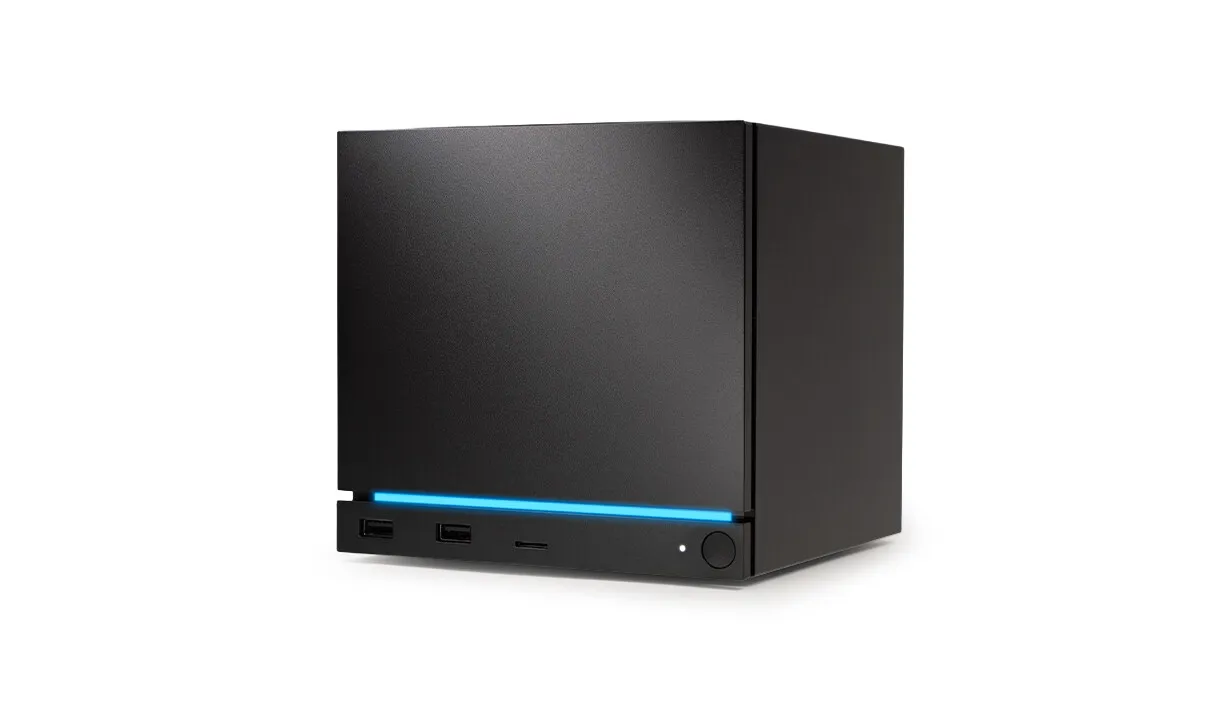
The Valve Steam Machine is back, and this time it is not just a weird experiment from the old Steam Box era. It is Valve’s serious attempt to put PC gaming in the living room again — with SteamOS 3, modern AMD hardware, and a price that has already started a huge debate.
Valve Steam Machine 2026: What Is It?
The Valve Steam Machine is a compact gaming PC designed to feel more like a console. Instead of sitting at a desk with Windows, mouse, keyboard, drivers, launchers, and a giant tower, the idea is simple: put Steam on your TV and start playing.
The most important thing to understand is that this is not a PlayStation clone — it is a living-room PC built around Steam.
That difference matters a lot. A PS5 or Xbox is a closed console platform. A Steam Machine is closer to a small desktop PC with a console-style interface, Steam library access, and the flexibility of Linux-based SteamOS.
That means it can feel simple on the couch, but it still carries some of the strengths and weaknesses of PC gaming. You get access to a massive Steam library, frequent game sales, mods in many titles, and a more open ecosystem. But you may also run into compatibility questions, graphics settings, anti-cheat issues, and performance differences from game to game.
The big promise is clear: Valve wants to make PC gaming less intimidating for the living room. The big question is even clearer: is the 2026 Steam Machine good enough to justify its price?
Valve Steam Machine Price: Why Everyone Is Talking About It
The Valve Steam Machine price is the hottest part of the conversation. The base 512GB model starts at $1,049 / €1,039, while higher configurations can go above that, especially if bundled with the Steam Controller or upgraded to 2TB storage.
The price instantly changes the conversation from “console killer” to “premium compact gaming PC.”
That is important for expectations. If this device had launched closer to a normal console price, many people would compare it directly with PS5, Xbox Series X, or maybe even Nintendo Switch 2. At over $1,000, it lands in a tougher space: premium mini PC, living-room gaming box, and Steam fan device.
The price is especially sensitive because the Steam Machine does not include a massive high-end desktop GPU. It is not trying to replace a monster RTX gaming tower. Instead, it is built around a semi-custom AMD platform optimized for SteamOS and a compact case.
For some gamers, that still makes sense. If you already own hundreds of Steam games, the ability to plug one small box into your TV and play your existing library is very appealing. You are not starting a new library from zero.
For others, the price will be difficult to accept. A PS5 or Xbox Series X can cost much less, and a custom gaming PC can offer more upgrade flexibility. The Steam Machine sits between both worlds, which makes it interesting but also risky.
Steam Machine Price Tiers Explained
The 2026 Steam Machine lineup is expected around these main configurations:
- 512GB model as the entry point
- 512GB model bundled with Steam Controller
- 2TB model with extra faceplate options
- 2TB model bundled with Steam Controller
The 2TB version is clearly aimed at people who already know they will install a large library. Modern AAA games can easily take 100GB or more, so 512GB can fill up fast.
However, storage is not the only reason to upgrade. The bundle with the controller may be attractive if you want the full couch setup from day one. But if you already use an Xbox controller, PlayStation controller, or mouse and keyboard, the base model may be enough.
Steam Machine Specs: What Is Inside?
The Steam Machine specs are built around a semi-custom AMD setup. It uses a Zen 4-based CPU, RDNA 3 graphics, DDR5 system memory, GDDR6 video memory, NVMe storage, and SteamOS 3 as the operating system.
The hardware is designed for efficient couch gaming, not unlimited ultra-settings PC gaming.
Typical reported specs include:
- Semi-custom AMD Zen 4 CPU
- 6 cores and 12 threads
- Semi-custom AMD RDNA 3 GPU
- 28 compute units
- 16GB DDR5 system memory
- 8GB GDDR6 VRAM
- 512GB or 2TB NVMe SSD storage
- microSD expansion
- Wi-Fi 6E
- Bluetooth 5.3
- Gigabit Ethernet
- HDMI and DisplayPort output
- Multiple USB ports
- SteamOS 3
On paper, that sounds very strong for a compact box. The CPU should be more than capable for a living-room gaming device, and the GPU should handle many modern games well when settings are tuned properly.
But the 8GB VRAM detail is worth watching. In 2026, several demanding games already benefit from more than 8GB of VRAM at high textures or high resolutions. This does not mean the Steam Machine is weak, but it does mean buyers should expect smart settings, upscaling, and realistic expectations.
Can It Really Do 4K Gaming?
Valve positions the Steam Machine around 4K gaming with FSR, which means upscaling is a central part of the experience. FSR can render a game internally at a lower resolution and upscale it to look sharper on a 4K TV.
The key phrase is “with FSR,” because native 4K ultra settings are not the same thing as upscaled 4K.
That is not automatically bad. Consoles also use upscaling, dynamic resolution, reconstruction, and performance modes all the time. The difference is that console users rarely think about the settings behind the scenes, while PC users often do.
On the Steam Machine, the quality will depend on the game. Some titles may run beautifully at high settings. Others may need medium settings, FSR performance modes, or frame-rate compromises.
For indie games, esports titles, older AAA games, and well-optimized Steam Deck Verified-style games, the Steam Machine could feel excellent. For the newest heavy ray-tracing games, it is safer to expect compromise.
SteamOS 3: The Real Secret Weapon
SteamOS 3 may be the most important part of the entire product. Hardware gets the headlines, but the software decides whether the Steam Machine feels like a console or just another Linux PC with a controller.
SteamOS 3 is what turns the Steam Machine from a mini PC into a couch-friendly gaming system.
SteamOS 3 is based on Linux and uses Valve’s gaming-focused ecosystem. It benefits from years of Steam Deck development, Proton compatibility improvements, shader caching, controller support, and performance tuning.
That matters because the Steam Deck proved something important: many PC games can feel surprisingly console-like when the interface, compatibility layer, and input system are handled well. The Steam Machine tries to bring that same idea to the TV.
The big advantage is simplicity. You turn on the device, open your Steam library, choose a game, and play. You do not need to manage Windows pop-ups, random driver tools, or several game launchers before getting to the fun part.
SteamOS 3 vs Windows Gaming
SteamOS 3 has a cleaner living-room experience than Windows, but Windows still has broader compatibility in some areas. This is especially true for games with certain anti-cheat systems, launchers, or non-Steam dependencies.
That creates a simple buying rule. If your favorite games already work well on Steam Deck or SteamOS, the Steam Machine becomes more attractive. If your favorite games depend on Windows-only anti-cheat, you should check compatibility carefully before buying.
Valve is also pushing SteamOS beyond its own hardware. That could matter long-term because it may create a bigger SteamOS ecosystem across handhelds, mini PCs, and DIY living-room builds.
If SteamOS grows, developers have more reason to support it properly. That is where the Steam Machine could become more important than its first-year sales numbers suggest.
Steam Machine vs PS5: Which One Makes More Sense?
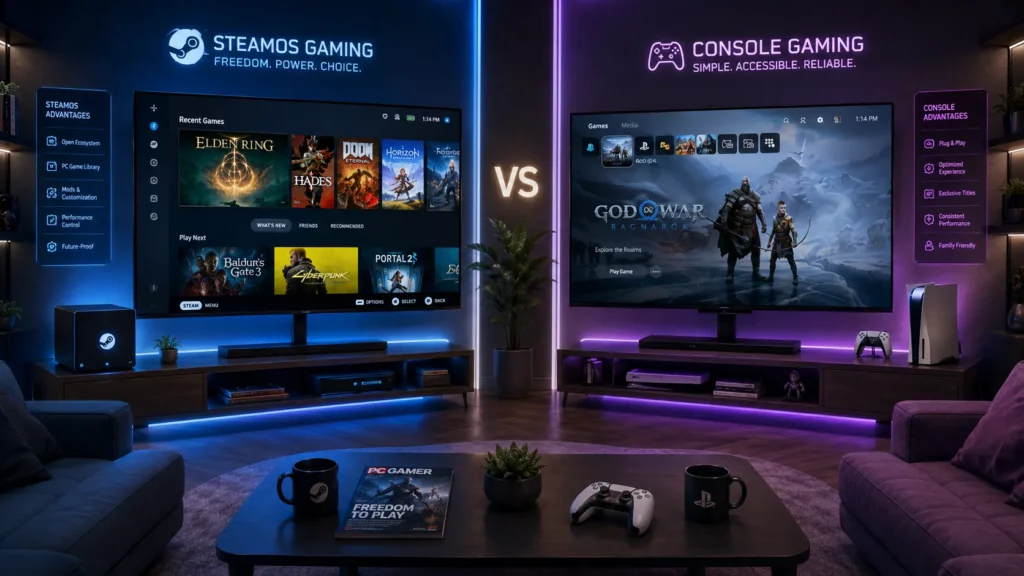
The Steam Machine vs PS5 comparison is unavoidable. Both can sit under a TV, both use controllers, both target living-room gaming, and both promise a simple experience. But they are not built for the same kind of buyer.
The PS5 is the easier console choice, while the Steam Machine is the more flexible Steam-library choice.
The PS5 is simple. You buy the console, buy PlayStation games, install them, and play. It has strong exclusives, polished system-level features, physical disc options depending on the model, and a very clear console identity.
The Steam Machine is different. It gives you access to your Steam library, PC pricing, mods in supported games, broader input options, and a more open system. It can also work as a Linux PC, which gives it more flexibility than a traditional console.
But flexibility is not always the same as convenience. Some people want zero decisions. They want the game to pick the best settings automatically, the store to be simple, and every major release to be optimized for their box.
For those people, PS5 may still be the better choice. For people who already live inside Steam, love PC sales, and want their library on the TV, the Steam Machine becomes much more interesting.
Steam Machine Advantages Over PS5
The Steam Machine has several real strengths:
- Existing Steam library support
- Frequent Steam sales and bundles
- Mods for supported games
- Mouse, keyboard, and controller flexibility
- SteamOS desktop mode
- More open PC-style ecosystem
- Potentially easier game ownership across devices
- Strong connection with Steam Deck
The Steam Deck connection is a big deal. If you already own a Steam Deck, the Steam Machine feels like a natural living-room partner. Your library, saves, achievements, friends list, and store habits are already there.
PS5 Advantages Over Steam Machine
The PS5 also has strong advantages:
- Lower entry price
- Strong first-party exclusives
- Very polished plug-and-play experience
- Better mainstream retail availability
- Simple performance modes
- Physical game options on disc models
- Larger console-focused audience
- Less compatibility research for buyers
That is why the Steam Machine is not automatically a “PS5 killer.” It is more like a premium alternative for Steam-first gamers who want a console-like PC.
Steam Machine Release Date: When Can You Buy It?
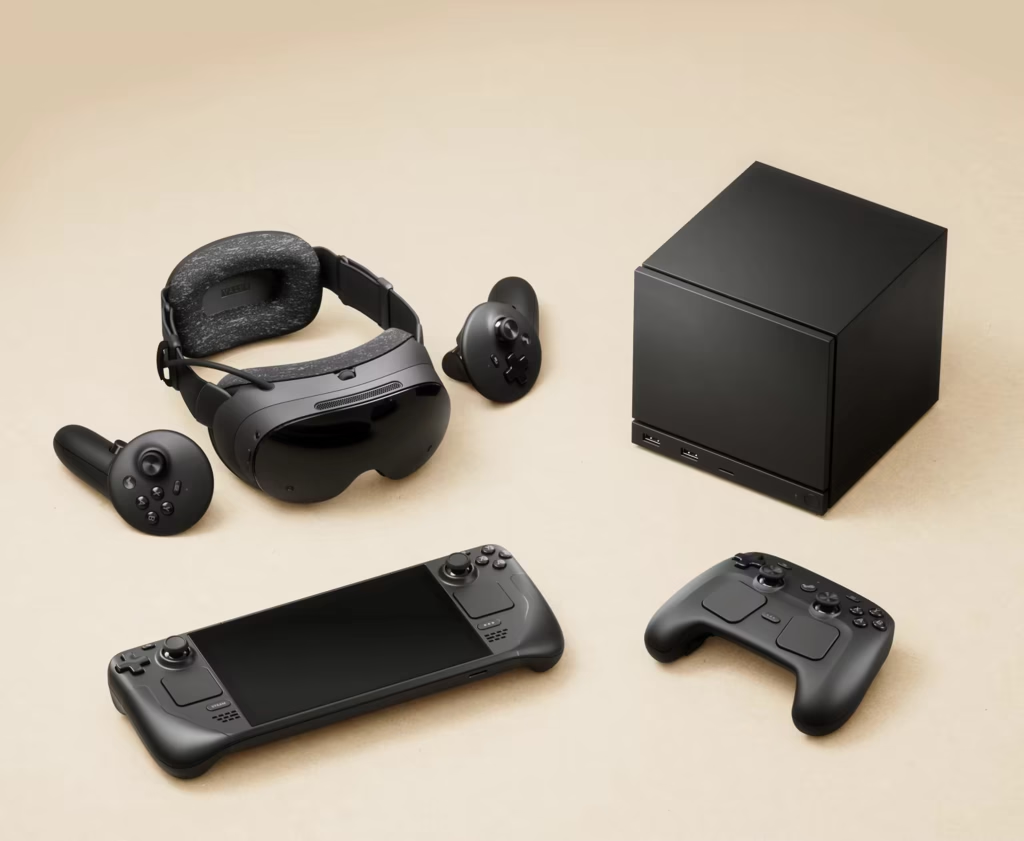
The Steam Machine release date discussion has moved from vague “2026 hardware” to a more concrete launch window. Purchase emails for the reservation system are expected to begin around June 29, 2026, with availability depending on queue position, region, and inventory.
The practical answer is that the Steam Machine launches in late June 2026, but not everyone will be able to buy one immediately.
That is an important distinction. A product can technically launch, but limited inventory means many buyers may wait weeks or months. This is especially possible with hardware affected by memory, storage, and component supply pressure.
The reservation approach is designed to reduce scalping and bots. Instead of a pure first-come-first-served rush, Valve is using a randomized system for early access. That may feel frustrating, but it can be fairer than a checkout page that sells out in seconds.
If you want one, the smartest approach is to follow the official Steam hardware page and check regional availability. Prices, bundles, taxes, and delivery timing can vary by market.
Who Should Buy the Valve Steam Machine?
The Valve Steam Machine is not for everyone, and that is okay. Its best audience is specific: people who already love Steam and want a polished way to play PC games on the couch.
The best buyer is someone with a big Steam library who values convenience more than maximum performance per euro.
You should consider the Steam Machine if:
- You already own many Steam games
- You want a small living-room gaming PC
- You like SteamOS and the Steam Deck experience
- You do not want to build a PC
- You prefer a console-like interface
- You are comfortable checking game compatibility
- You want one device for controller gaming, TV gaming, and light PC use
You should probably wait or skip it if:
- You want the cheapest way to play games
- You mainly play PlayStation exclusives
- You need maximum graphics power
- You want native 4K ultra settings in every AAA game
- You dislike adjusting settings
- You mostly play games with Windows-only anti-cheat
- You already have a strong gaming PC connected to your TV
The Steam Machine makes the most sense as a lifestyle device. It is not just about raw frames per second. It is about where and how you want to play.
Is the Valve Steam Machine Worth It?
The honest answer depends on what you compare it against. Against a PS5, the Steam Machine looks expensive. Against a custom compact living-room PC with SteamOS-style polish, it starts to look more reasonable.
The Steam Machine is expensive as a console, but interesting as a ready-made Steam living-room PC.
That is the entire value debate in one sentence. If you judge it only as a console, the price is hard to love. If you judge it as a compact, optimized, living-room PC that brings your existing Steam library to the TV, the argument becomes stronger.
The risk is that it may land in a narrow middle. Console players may say it costs too much. PC players may say they can build or buy something more powerful. Steam Deck owners may wonder if they need another SteamOS device.
But Valve does not always need to win the first wave by pure hardware sales. The Steam Deck changed handheld PC gaming by making SteamOS feel real, usable, and exciting. The Steam Machine could do something similar for living-room PCs.
If developers start treating SteamOS as a serious target, the whole ecosystem benefits. That includes Steam Deck, Steam Machine, handheld PCs, mini PCs, and maybe future third-party SteamOS devices.
What Valve Needs to Get Right Next
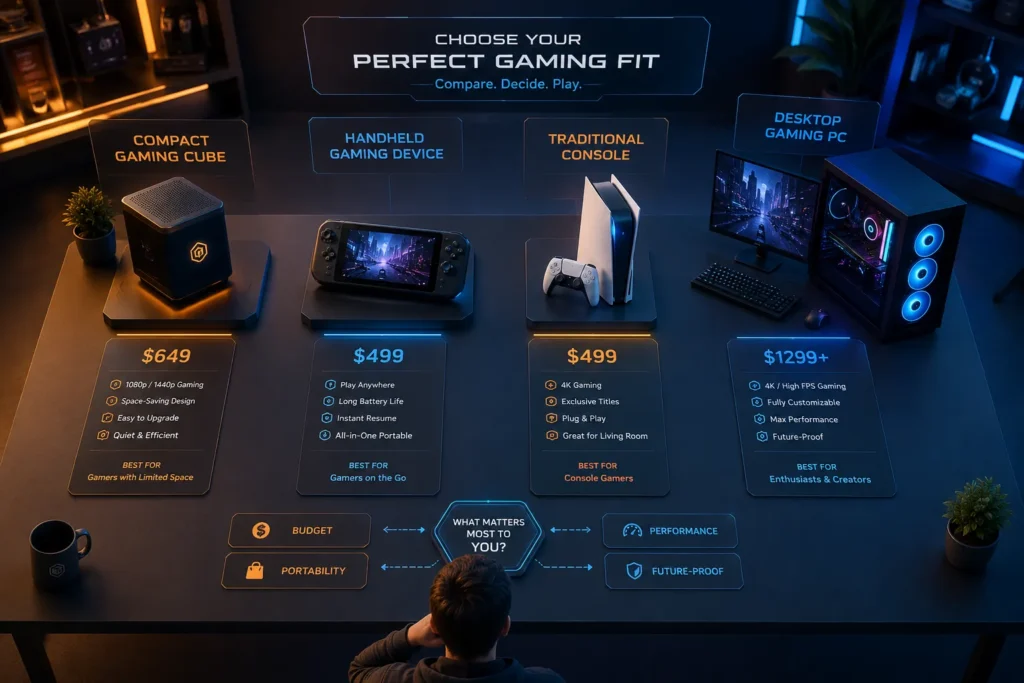
For the Steam Machine to succeed, Valve needs more than good hardware. It needs trust, clarity, and smooth daily use.
The launch will be judged by real living-room experience, not just spec sheets.
Valve needs to nail these areas:
- Game compatibility clarity
Buyers should know which games run well before they buy or install them. - Automatic settings recommendations
Console-style users do not want to spend 20 minutes tuning every game. - Strong controller experience
The Steam Controller needs to feel natural, not like a niche experiment. - Better anti-cheat support
Popular multiplayer games need to work, or mainstream buyers will hesitate. - Stable pricing and availability
A great product can lose momentum if it is too expensive or hard to buy. - Clear SteamOS updates
Valve must keep improving performance, compatibility, and desktop usability.
The Steam Machine does not need to beat every gaming PC. It needs to make Steam on the TV feel easy, reliable, and fun.
Final Verdict: A Bold Comeback With a Big Price Tag
The 2026 Valve Steam Machine is one of the most interesting gaming devices of the year. It brings back a concept that once failed, but now returns in a much stronger world: Steam Deck is successful, Proton is better, SteamOS 3 is mature, and players are more open to console-like PC gaming.
The biggest challenge is not the idea — the idea is great. The biggest challenge is the price.
At over $1,000, the Steam Machine needs to prove it is more than a cool cube with Steam branding. It needs to feel smooth, quiet, powerful enough, and genuinely easier than building your own couch PC.
For Steam fans, this could be a dream living-room box. For console players, it may feel too expensive. For PC builders, it may feel too limited. But for the right person — someone with a large Steam library, a 4K TV, and a love for simple couch gaming — the Valve Steam Machine could be exactly the missing piece.
Frequently Asked Questions
Is the Valve Steam Machine coming out in 2026?
Yes, the Valve Steam Machine is a 2026 hardware launch. Early purchase emails through the reservation system are expected around late June 2026, but actual availability may depend on region and inventory.
How much does the Valve Steam Machine cost?
The Valve Steam Machine price starts at around $1,049 / €1,039 for the 512GB model. Higher configurations, including 2TB storage and Steam Controller bundles, cost more.
What are the Steam Machine specs?
The Steam Machine specs include a semi-custom AMD Zen 4 CPU, semi-custom AMD RDNA 3 graphics, 16GB DDR5 memory, 8GB GDDR6 VRAM, and 512GB or 2TB NVMe storage. It also supports modern connectivity such as Wi-Fi, Bluetooth, Ethernet, USB, HDMI, and DisplayPort.
Is the Steam Machine better than PS5?
The Steam Machine vs PS5 answer depends on what you value. PS5 is cheaper and simpler, while the Steam Machine is more flexible and better for people who already own many Steam games.
Does the Valve Steam Machine run SteamOS 3?
Yes, the Valve Steam Machine runs SteamOS 3. That is a major part of its appeal because it brings a Steam Deck-style interface and Linux-based gaming experience to the living room.


[…] Cloud gaming is only one part of the living-room gaming story. If you want a device that feels more like a PC-console hybrid, check out our breakdown of the upcoming Valve Steam Machine and how it could change TV gaming: Valve Steam Machine. […]