For decades, “going back to the Moon” sounded like one of those things governments loved to announce and quietly delay. Big speeches, shiny concept art, then another timeline slipping into the future.
But 2026 feels different.
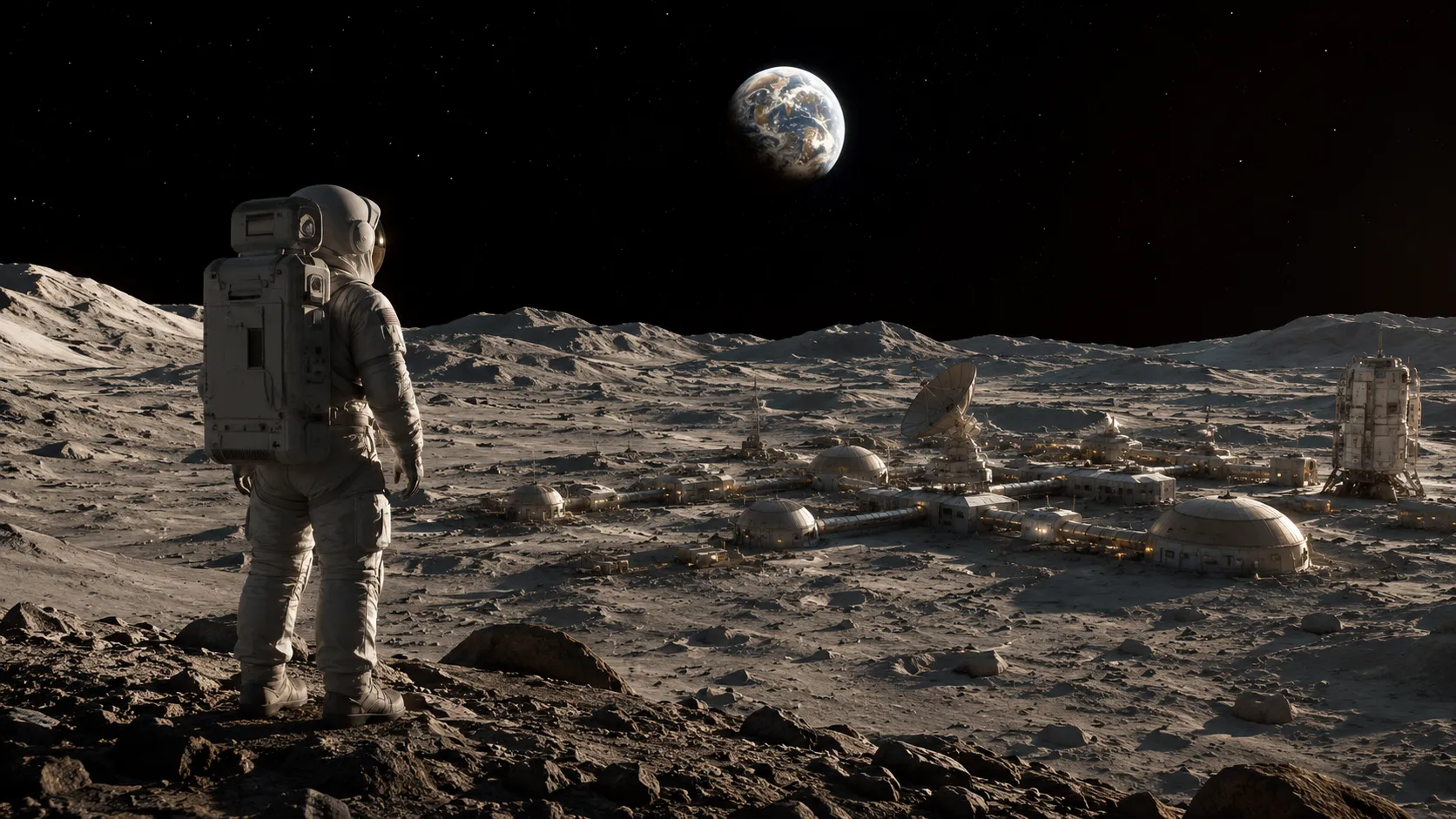
NASA is no longer just talking about footprints and flags. It is talking about a Moon Base, rovers, cargo landers, drones, nuclear power, private companies, and a permanent human presence near the lunar south pole. In other words: this is starting to look less like a nostalgia trip and more like the beginning of an actual lunar economy.
NASA’s Moon Base Plan Is No Longer Sci-Fi
NASA has now laid out a Moon Base plan that sounds almost unreal at first: a long-term lunar outpost spread across potentially hundreds of square miles near the Moon’s south pole.
Why so big? Because a Moon Base is not just one shiny dome with astronauts waving from the window. It needs landing zones, roads or travel routes, power systems, communication systems, science stations, cargo areas, and safe distances between risky equipment. If nuclear power systems are involved, you probably do not want them sitting right beside the bedroom.
The south pole matters because scientists believe there may be water ice hidden in permanently shadowed craters. Water is the golden ticket in space. It can support astronauts, help grow food, and potentially be split into hydrogen and oxygen for rocket fuel. That could turn the Moon into a stepping stone instead of a dead-end destination.
NASA has also announced nearly $1 billion in initial contracts and mission planning for early Moon Base infrastructure. That includes landers, lunar terrain vehicles, cargo deliveries, and small “hopping” drones that could scout rough terrain. This is not just one mission. It is the start of a system.
Artemis II Proved the Hardware Can Actually Work
The big reason this suddenly feels more serious is Artemis II.
Artemis II was the first crewed mission of NASA’s Artemis program to fly around the Moon. And the important part is not just that it looked impressive. The important part is that the key systems worked.
The Orion spacecraft came back safely. The heat shield performed much better than the worrying results seen after Artemis I. The spacecraft landed very close to its target area. The giant SLS rocket placed Orion where it needed to go. In simple terms: NASA tested the scary parts, and the mission gave them enough confidence to keep moving.
That matters because space programs are not built on hype. They are built on boring-but-critical questions like: Can the rocket hit the right trajectory? Can the capsule survive re-entry? Can the heat shield handle the punishment? Can the recovery teams bring the crew home safely?
Artemis II gave NASA real flight data, not just simulations. And in space, real data is everything.
Artemis III Is Coming — But the Moon Landing Timeline Has Shifted
NASA is expected to announce the Artemis III crew in June 2026, which is a big symbolic moment. It means the program is moving from “future concept” into named humans, real training, and real mission planning.
But here is the important detail: Artemis III is no longer being presented as the direct lunar landing mission in the way many people originally expected. NASA’s current plan describes Artemis III as a crewed Earth-orbit mission designed to test docking and integrated operations between Orion and commercial lunar landers from companies like SpaceX and Blue Origin.
That may sound less exciting than “astronauts walking on the Moon,” but it is actually a smart step. Landing people on the Moon is not just about launching a capsule. NASA needs Orion, landers, refueling plans, docking systems, spacesuits, communications, and surface operations to work together. Artemis III is the rehearsal before the truly dangerous performance.
The actual return of astronauts to the lunar surface is now tied to later Artemis missions, with Artemis IV currently being discussed as the major crewed landing step. So yes, humans are getting closer to the lunar surface again — but NASA is trying to reduce risk before putting boots in the dust.
Honestly, that is probably the right move.
SpaceX Shows Why This Road Is Still Very Bumpy
Of course, no modern Moon story is complete without SpaceX.
Starship is central to NASA’s long-term lunar plans because it is supposed to become a huge, reusable transport system capable of carrying serious cargo — and eventually people — beyond Earth. If it works, it could change the economics of spaceflight completely.
But “if it works” is doing a lot of heavy lifting.
Starship Flight 12 recently suffered a booster mishap, and the FAA ordered an investigation before the vehicle can return to flight. The upper-stage Starship achieved several goals, but the Super Heavy booster did not complete its planned soft splashdown. That is exactly the kind of mixed result we have come to expect from SpaceX: impressive progress wrapped inside dramatic failure.
This does not mean Starship is doomed. SpaceX builds by testing, breaking, fixing, and testing again. But it does show that the Moon plan is not a straight road. NASA can announce bases, contracts, and timelines — but the whole system still depends on extremely difficult machines working reliably.
And right now, some of those machines are still learning how not to explode.
This Is Also a Race — And China Is Moving Fast
The United States is not doing this in isolation.
China is openly pushing toward landing astronauts on the Moon by 2030. Its space station is already operating in orbit, its robotic Moon missions have been impressive, and its lunar program is becoming more organized and aggressive. This is not a small side project. China clearly wants a major role in the next chapter of space exploration.
That changes the tone of everything.
The Moon is no longer just a science destination. It is a technology race, a prestige race, and eventually maybe even an economic race. Whoever builds reliable systems for power, mining, transport, construction, and communication on the Moon first could shape the rules of the next space era.
That is why NASA is working with private companies like Blue Origin, SpaceX, Astrolab, Firefly Aerospace, Lunar Outpost, and others. The goal is not only to plant a flag. The goal is to build capability.
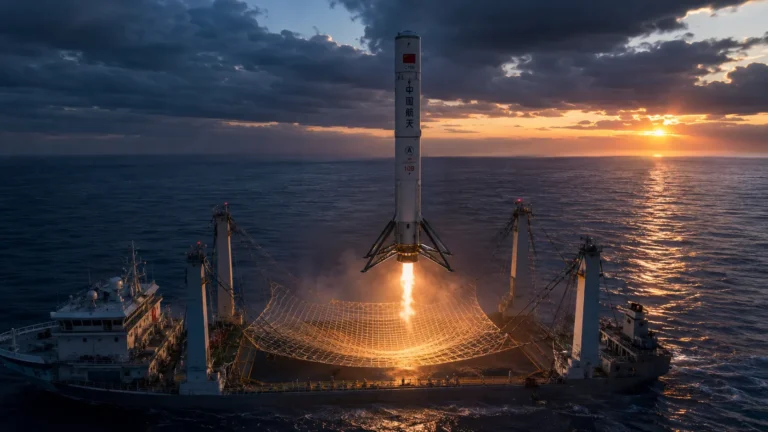
Blue Origin’s MK1 “Endurance” Moon lander is a good example. It recently completed extreme thermal vacuum testing at NASA’s Johnson Space Center, meaning engineers tested whether it could survive space-like vacuum and temperature conditions. This uncrewed cargo lander is designed to support future lunar operations and help mature the technology needed for bigger, human-rated systems.
In normal language: before humans live on the Moon, robots and cargo ships have to prove they can handle the job.
So What Does a Permanent Moon Base Mean for Regular People?
At first, a Moon Base can sound like something only astronauts and billionaires should care about. But regular people may feel the impact in quieter, more practical ways.
Space programs often push technology forward because they force engineers to solve brutal problems: limited power, extreme temperatures, remote medicine, lightweight materials, autonomous robots, recycling systems, radiation protection, and high-efficiency communication. Many of those solutions eventually come back to Earth.
A permanent Moon Base could accelerate better battery systems, remote-controlled robotics, advanced construction methods, water recycling, compact energy systems, and medical monitoring tech. It could also inspire a new generation of students to care about science, engineering, design, software, and exploration.
And yes, it could create new business opportunities too. Not tomorrow, and not for everyone. But over time, the Moon could become a testing ground for industries that sound crazy today: lunar construction, space logistics, off-world mining, robotic maintenance, and deep-space communications.
The internet once looked like a niche playground for researchers. Smartphones once looked like luxury gadgets. AI chatbots once looked like toys. Big technology shifts often look weird before they become normal.
The Moon Base might be one of those shifts.
The Moon Is Starting to Look Like a Place Again
The most exciting thing about this moment is not one rocket, one lander, or one NASA press event. It is the feeling that the Moon is becoming a real place in human planning again.
Not just a symbol. Not just a photo from history books. A place where machines will land, rovers will drive, drones will scout, astronauts will work, and infrastructure will slowly grow.
Will the timeline slip? Probably. Space is hard, expensive, political, and unforgiving. Starship still has problems. NASA still has budget pressure. China is moving fast. Every mission can reveal a new issue.
But this time, the pieces are real: successful crewed flight data, active contracts, tested landers, private companies competing, international pressure, and a serious plan for staying.
We are not just going back to the Moon to look around.
This time, it looks like we are going back to build.